PCI Forms 32-Member Panel to Make Pharmacy Graduates Industry-Ready
PCI has announced a 32-member industry-academia panel to improve pharmacy training and employability. Here is what pharmacy students and colleges should know.
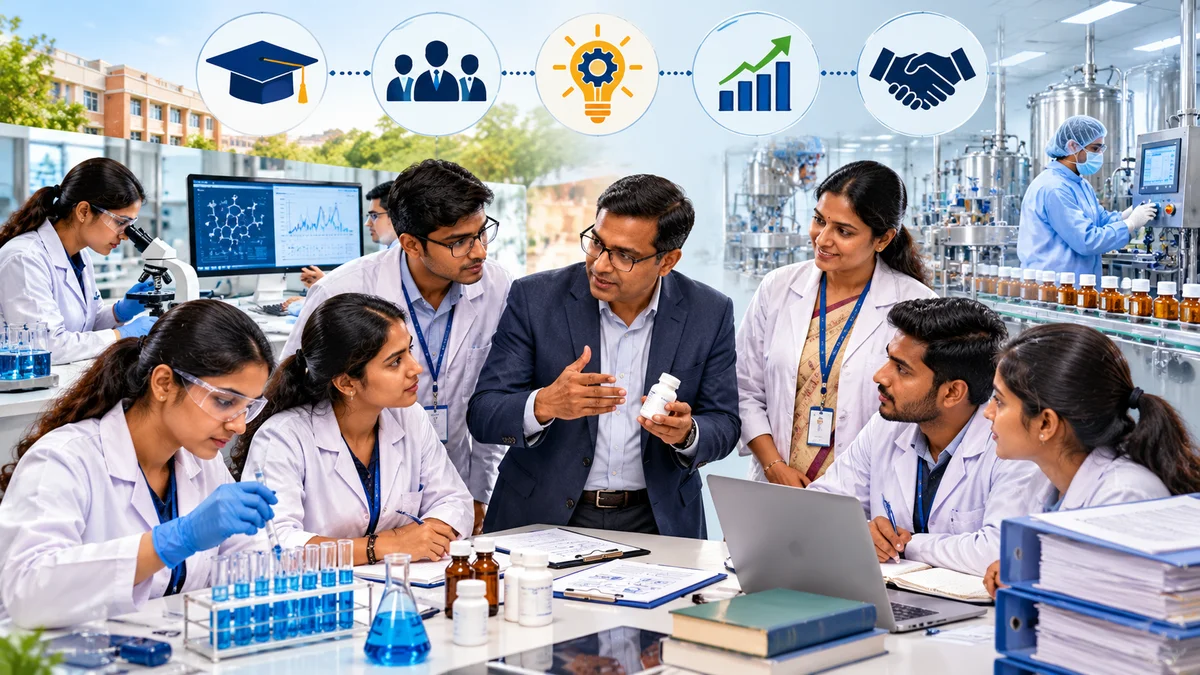
India’s pharmacy education system may be moving closer to the pharmaceutical industry. On 28 October 2026, the Pharmacy Council of India (PCI) announced a 32-member Expert Industry-Academia Advisory Committee in New Delhi.
The panel is expected to identify gaps between college teaching and workplace needs. Its stated focus includes practical training, experiential learning, innovation and greater industry participation. The development matters to pharmacy students, colleges and employers.
The announcement was carried in a press release published as sponsored content by Business Standard on 29 October. It should therefore be read as a report of the organisers’ announcement, rather than an independently reported account. The release says the committee will be chaired by B. R. Sikri, Chairman of the Federation of Pharma Entrepreneurs (FOPE).
WHAT HAPPENED AT THE PCI MEETING?
The meeting brought together PCI leaders and industry representatives, including PCI President Dr Montukumar M. Patel, Mankind Pharma Chairman Ramesh Juneja, Abbott India Chairman and Indian Pharmaceutical Alliance Director General Sudarshan Jain, and FOPE Chairman B. R. Sikri.
The discussion centred on bringing pharmacy education closer to workplace requirements. The release says the new expert committee will coordinate among industry, academic institutions and regulatory stakeholders, identify skill gaps, encourage hands-on learning and increase industry participation in education.
One practical point raised at the meeting was structured industrial training. Ramesh Juneja said students need meaningful opportunities to learn in industry settings and stated that Mankind Pharma would support students undergoing training at the company.
This is an encouraging industry commitment, but it should not be mistaken for a nationwide internship scheme or a confirmed number of training seats. The release does not publish a national placement or internship allocation.
WHY DOES PHARMACY EDUCATION NEED A STRONGER INDUSTRY LINK?
A pharmacy degree provides scientific foundations, but employers also need people who can apply that knowledge. Students may understand pharmaceutics or pharmacology in theory, yet need practical exposure to SOPs, documentation, quality systems, manufacturing records, laboratory instruments and regulatory requirements.
This gap is visible in quality assurance, quality control, production, regulatory affairs, pharmacovigilance, clinical research and R&D, where classroom teaching alone may not provide enough workplace experience.
PCI’s official website lists the 2026 Bachelor of Pharmacy syllabus under the National Education Policy 2020 framework. The press release also referred to the revised B.Pharm curriculum and an M.Pharm programme in Medical Devices as initiatives intended to prepare graduates for emerging professional opportunities.
The revised syllabus is an important development, but a curriculum can deliver results only when colleges also have suitable laboratories, trained faculty, practical resources and meaningful industry connections.
THE JOB MARKET IS ASKING FOR SPECIALISED SKILLS
The timing is important. A report by Spectrum Talent Management, carried by PTI and published by ETHRWorld on 19 October 2026, said hiring requests in India's pharmaceutical and life-sciences sector rose 20% during April–September 2026.
It said professionals with four to eight years of experience accounted for around 60% of demand. The roles highlighted included regulatory affairs, data analytics, artificial intelligence and machine learning, operational excellence, complex generics R&D, supply chain and global capability centres.
There is an important qualification: this is a hiring-request trend, not a guarantee that vacancies have increased equally for fresh graduates. The fact that mid-career professionals made up most demand suggests employers are looking for people who can contribute with limited training.
For students, the lesson is to build practical skills early and seek internships, projects and supervised exposure before graduation.
WHICH SKILLS SHOULD PHARMACY STUDENTS START BUILDING?
Students do not need to master every specialisation. They should first build a sound foundation and then develop skills related to the career they want.
• Manufacturing and quality: Learn GMP basics, documentation, batch records, deviation reporting, SOPs and the difference between quality assurance and quality control.
• Regulatory affairs: Understand product dossiers, labelling, variations and regulatory submissions. Build familiarity with Indian and international regulatory frameworks.
• Pharmacovigilance: Practise accurate case documentation, adverse-event terminology, safety reporting and clear medical writing.
• Clinical research: Learn research ethics, informed consent, protocol basics, clinical-trial documentation and data quality.
• R&D and complex generics: Strengthen analytical chemistry, formulation science, problem-solving and scientific literature review.
• Digital and data skills: Learn spreadsheets, basic statistics, data visualisation and responsible use of AI tools. Digital skills should support scientific judgement, not replace it.
Communication, teamwork, attention to detail and ethical conduct are valuable in almost every pharmacy role.
WHAT SHOULD COLLEGES AND COMPANIES DO NEXT?
A committee can make recommendations, but its value will be measured by what changes on the ground. Colleges should build formal relationships with manufacturers, hospitals, testing laboratories, research organisations and regulatory professionals. Students should have defined learning objectives during internships rather than being used only for routine clerical work.
Companies can offer supervised projects, plant and laboratory visits, guest lectures and case studies. Colleges should prepare students in safety, confidentiality, documentation and professional conduct before workplace training.
The advisory committee should ideally publish clear priorities, a calendar of consultations, measurable outcomes and a way for colleges and students to share feedback. This would help the sector understand whether the panel is improving training access and graduate readiness.
WHAT IS STILL NOT CLEAR?
As of 30 October 2026, the available press release announces the 32-member panel and describes its broad objectives. It does not provide a complete public list of members, detailed terms of reference, a meeting schedule, deadlines or measurable targets.
No nationwide internship quota or guaranteed placement programme has been announced in the cited material.
Students should treat this as an industry-engagement development, not a promise of immediate jobs or compulsory internships. They should follow formal PCI notifications and university instructions.
CONCLUSION
The PCI’s new industry-academia panel is a useful step towards connecting pharmacy education with the realities of the workplace. India’s pharmaceutical sector is expanding into complex generics, research, quality systems, digital tools and specialised regulatory work. Graduates will need more than a degree certificate: they will need practical competence, sound scientific understanding and the ability to learn continuously.
The real test will be whether the 32-member committee turns discussion into accessible training, stronger college-industry partnerships and measurable improvements in student skills. For pharmacy students, the best response is to start building those skills now while keeping track of official PCI updates.
SOURCES AND FURTHER READING
1. PCI – B.Pharm syllabus 2026 under NEP 2020: https://pci.gov.in/en/syllabus-bachelor-of-pharmacy-b-pharm-2026-as-per-nep-2020/
2. Business Standard – PCI industry-academia committee announcement: https://www.business-standard.com/amp/content/press-releases-ani/pci-strengthens-industry-academia-collaboration-to-develop-industry-ready-pharmacy-graduates-126102901281_1.html?isa=yes (sponsored press release).
3. ETHRWorld / PTI – Pharma and life-sciences hiring requests rise 20%: https://hr.economictimes.indiatimes.com/amp/news/industry/healthcare-pharma-hiring-requests-rise-20-as-firms-seek-specialised-talent-report/135051463
EDITORIAL NOTE: The committee announcement is based on a sponsored press release. Its stated objectives are not yet evidence of implemented changes or guaranteed student opportunities.
Esskay bhayana, being a registered pharmacist & having more than 30+ years of experience, covers news and latest innovations in the pharmaceutical industry.
More from this section
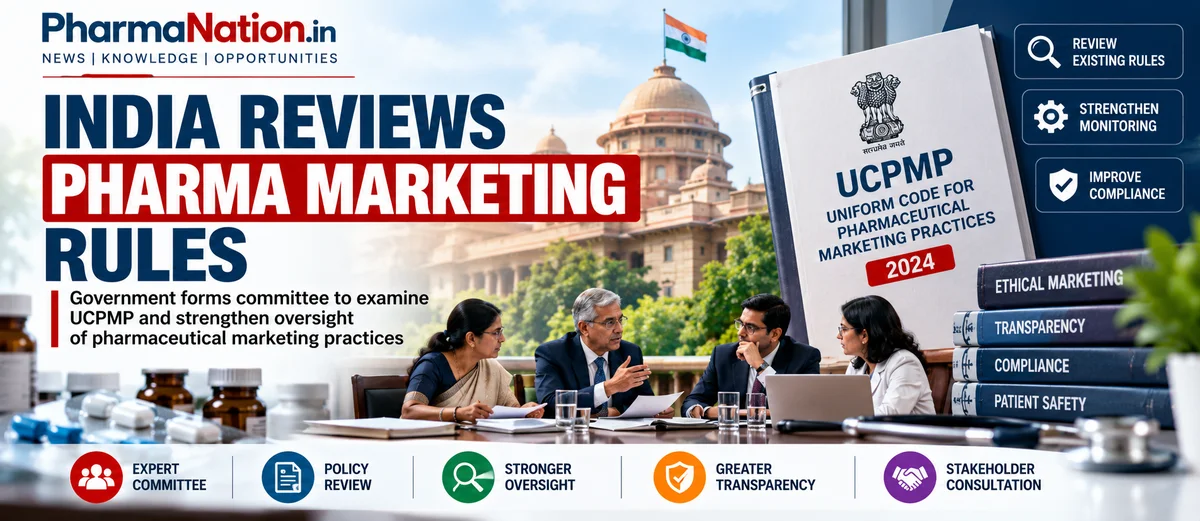
Government Sets Up Panel to Review Pharma Marketing Rules in India
Drug Licence Compliance in India: ONDLS Integration Could Reduce Paperwork for Pharmacies and Wholesalers
Drug Recall in India: What Happens When a Medicine Fails a Quality Test?
Reader Comments
Comments are reviewed by our desk before they appear. Sign in with your mobile number to join the discussion.