
CDSCO Approves Qfitlia in India: New Haemophilia Treatment Explained
CDSCO approves Sanofi's Qfitlia (fitusiran) in India for haemophilia A and B. Learn about its mechanism, clinical evidence, safety monitoring and significance.

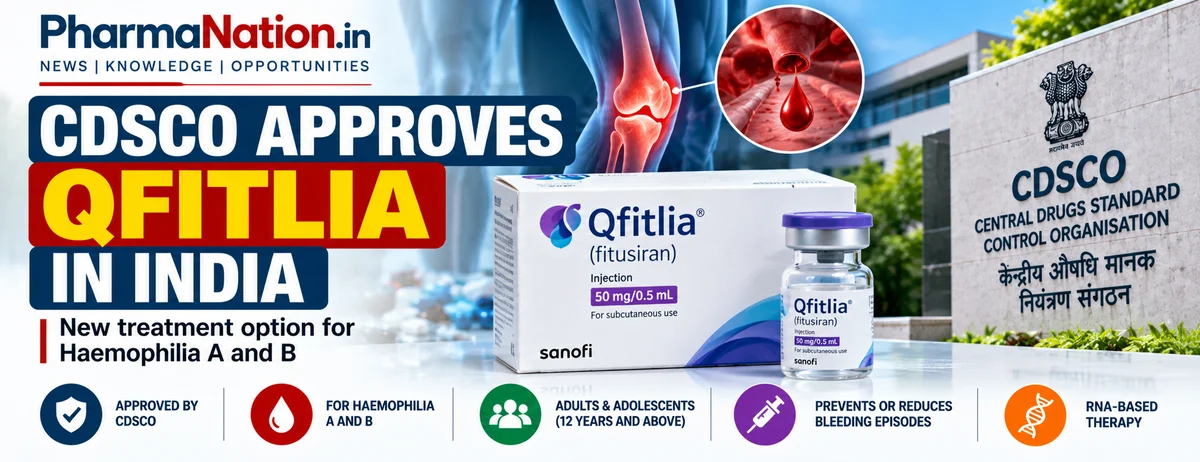
CDSCO Approves Qfitlia in India: How Sanofi's New Haemophilia Treatment Works
India's pharmaceutical and healthcare sectors have reached an important regulatory milestone with the approval of Qfitlia (fitusiran), a new treatment intended to prevent or reduce bleeding episodes in people living with haemophilia A or B.
On 21 October 2026, Central Drugs Standard Control Organisation (CDSCO) granted marketing authorisation to Qfitlia, developed by Sanofi. The authorisation covers adults and adolescents aged 12 years and older with haemophilia A or B, including patients with or without factor VIII or factor IX inhibitors. Sanofi
The treatment introduces a different approach to haemophilia management. Instead of replacing a deficient clotting factor, fitusiran reduces the level of antithrombin, a naturally occurring protein that limits blood clot formation.
The approval expands the range of preventive treatment options available to eligible patients. However, its clinical benefits must be considered alongside the need for careful monitoring, appropriate patient selection and continued assessment of safety.
Key Highlights
Regulatory milestone: CDSCO granted marketing authorisation for Qfitlia on 21 October 2026.
Active ingredient: Fitusiran, an antithrombin-directed small interfering RNA (siRNA) therapeutic.
Approved patient groups: Adults and adolescents aged 12 years and older with haemophilia A or B, with or without factor VIII or IX inhibitors.
Treatment objective: Routine prophylaxis to prevent or reduce bleeding episodes.
Dosing approach: Treatment is guided by antithrombin activity monitoring.
Safety consideration: International regulatory information highlights important risks involving blood clots, gallbladder disease and liver toxicity. Sanofi
What Is Qfitlia (Fitusiran)?
Qfitlia is a prescription medicine containing fitusiran, an antithrombin-directed small interfering RNA therapeutic.
It is intended for routine prophylaxis, meaning preventive treatment given to reduce the frequency of bleeding episodes rather than treatment administered only after a bleed occurs.
The Indian authorisation covers eligible patients with both haemophilia A and haemophilia B, regardless of whether they have developed inhibitors against replacement clotting factors. Sanofi
This is significant because haemophilia management has traditionally relied heavily on replacing the clotting factor that is missing or deficient.
Fitusiran follows a different therapeutic strategy by modifying the body's natural regulation of coagulation.
Understanding Haemophilia A and Haemophilia B
Haemophilia is an inherited bleeding disorder in which the blood does not clot normally, increasing the risk of prolonged or spontaneous bleeding.
The two principal types differ according to the clotting factor affected.
Condition | Underlying deficiency |
|---|---|
Haemophilia A | Factor VIII |
Haemophilia B | Factor IX |
Bleeding can affect muscles and joints and may lead to long-term complications when not adequately managed. Repeated bleeding into joints can cause damage, pain and disability. U.S. Food and Drug Administration
Treatment strategies include on-demand treatment for bleeding episodes and prophylactic therapies intended to prevent or reduce bleeding.
For some patients, inhibitors—antibodies that interfere with replacement clotting factors—make conventional treatment more challenging.
The availability of an additional preventive treatment approach may therefore be particularly relevant for patients whose clinical circumstances make haemophilia management difficult.
How Does Fitusiran Work?
Fitusiran works by reducing the production of antithrombin, a protein that naturally inhibits important components of the blood-clotting process.
It uses RNA interference, a biological mechanism through which small interfering RNA molecules reduce the expression of a targeted gene.
In simplified terms, fitusiran reduces antithrombin production, allowing greater thrombin generation and helping rebalance the coagulation system.
This differs from conventional factor replacement therapy, which supplies the deficient clotting factor.
The approach can be relevant to both haemophilia A and haemophilia B because it does not depend on replacing factor VIII or factor IX directly. U.S. Food and Drug Administration
How Is This Different From Traditional Treatment?
Feature | Conventional factor replacement | Fitusiran |
|---|---|---|
Therapeutic approach | Replaces the deficient clotting factor | Reduces antithrombin production |
Biological target | Factor VIII or factor IX, depending on the condition | Antithrombin |
Treatment objective | Improve clotting and prevent or control bleeding | Rebalance coagulation to prevent or reduce bleeding |
Monitoring considerations | Depend on the treatment and patient's clinical needs | Includes antithrombin activity monitoring and other safety assessments |
This comparison describes broad treatment mechanisms. Actual treatment selection depends on the patient's condition, existing therapies, clinical history and the applicable prescribing information.
What Does the Clinical Evidence Show?
The Indian marketing authorisation announcement states that approval was based on the ATLAS Phase III clinical development programme, which demonstrated clinically meaningful protection against bleeding, measured using annualised bleeding rates. Sanofi
The US Food and Drug Administration (FDA) approved Qfitlia in March 2025 for routine prophylaxis in patients aged 12 years and older with haemophilia A or B, with or without inhibitors. Its regulatory assessment also describes the role of antithrombin-based dosing in balancing efficacy and safety. U.S. Food and Drug Administration
Clinical evidence should nevertheless be interpreted carefully.
Results from individual trials depend on the study population, treatment regimen, comparator and outcome being measured. Findings from international studies do not guarantee an identical outcome for every patient in India.
The Indian approval establishes regulatory authorisation for the stated indication; it does not mean that the treatment is suitable for every person with haemophilia.
Why Antithrombin Monitoring Is Important
One of the defining features of fitusiran treatment is the use of antithrombin activity to guide dosing.
The objective is to reduce bleeding while avoiding excessive suppression of antithrombin, which could increase the risk of unwanted clot formation.
The FDA's prescribing information describes antithrombin-based dosing and monitoring as central to the safe use of Qfitlia under its US-approved regimen. U.S. Food and Drug Administration
For healthcare professionals, this means that treatment requires more than administering an injection at a predetermined interval.
The treating team must consider laboratory monitoring, the patient's clinical status, concomitant treatments and the relevant prescribing instructions.
Sanofi has also highlighted the importance of education around antithrombin monitoring in India as part of the treatment's introduction. Sanofi
Important Safety Considerations
Although the approval creates another treatment option, fitusiran has important risks that healthcare professionals must consider.
The FDA's US prescribing information carries a boxed warning for thrombotic events and acute or recurrent gallbladder disease. It also identifies liver toxicity as a risk requiring monitoring. U.S. Food and Drug Administration
1. Risk of blood clots
Reducing antithrombin can increase thrombin generation. If coagulation becomes excessive, serious thrombotic events may occur.
This is one reason antithrombin activity monitoring and appropriate dosing are important.
2. Gallbladder disease
International prescribing information describes acute and recurrent gallbladder disease among the identified risks. Some affected patients have required surgical treatment.
3. Liver monitoring
The US prescribing information calls for liver-function monitoring, including baseline testing and regular follow-up after treatment initiation or dose increases.
Important: These safety details are based on US regulatory information. Healthcare professionals in India should follow the current Indian-approved prescribing information and applicable CDSCO requirements, which may differ in their wording or specific instructions.
Patients should not start, stop or modify treatment without advice from their treating specialist.
What Conditions Has CDSCO Attached to the Approval Process?
CDSCO's Subject Expert Committee (SEC) for Haematology considered fitusiran at its meeting on 13 January 2026.
The committee recommended permission for import and marketing of the proposed formulations, subject to conditions. These included submission of a post-marketing surveillance study protocol within three months of marketing authorisation for further review, along with revised prescribing information incorporating relevant adverse events and warnings in line with internationally approved information. CDSCO
These recommendations are important because approval of a new therapy is not the end of its safety evaluation.
Post-marketing surveillance can help regulators and manufacturers continue monitoring safety once a medicine is used in a wider patient population.
The SEC document records the committee's recommendations and conditions. The subsequent marketing authorisation was announced by Sanofi on 21 October 2026. The committee document alone should not be interpreted as proof that every post-approval condition has already been fulfilled.
What Could This Mean for India's Pharmaceutical Industry?
The approval has implications beyond the treatment of an individual disease.
Advancing specialised medicines
The introduction of a new antithrombin-directed RNA therapeutic illustrates the growing role of targeted biological mechanisms in pharmaceutical research and development.
It also highlights the importance of specialised medicines for conditions that may require lifelong management.
Strengthening regulatory oversight
The review process demonstrates the role of expert committees in evaluating clinical evidence and considering conditions intended to support the safe introduction of new therapies.
For pharmaceutical companies, regulatory approval must be accompanied by compliance with applicable post-marketing requirements and prescribing-information obligations.
Expanding the role of specialist care
The treatment's monitoring requirements underscore the importance of specialist expertise, laboratory capability and patient education.
Availability alone does not guarantee access. Affordability, distribution, reimbursement, awareness and the capacity to provide appropriate monitoring will influence how effectively eligible patients can benefit.
Importance for pharmaceutical professionals
The development is relevant to professionals working in several areas:
Clinical research and drug development.
Regulatory affairs and pharmacovigilance.
Haematology and specialised patient care.
Medical affairs and scientific communication.
Pharmaceutical market access and patient-support programmes.
It also provides a useful example for pharmacy students learning about RNA therapeutics, clinical trials, new-drug approval and post-marketing surveillance.
Does the Approval Mean Qfitlia Is Immediately Available Across India?
Marketing authorisation allows a medicine to be marketed subject to the applicable regulatory conditions. It does not, by itself, establish that the product is immediately available in every hospital or pharmacy.
The announcement does not provide a verified nationwide availability date, Indian retail price or details of reimbursement arrangements.
Patients and healthcare professionals should therefore confirm availability, the current approved prescribing information and access arrangements through appropriate medical and pharmaceutical channels.
Frequently Asked Questions
1. What is Qfitlia used for?
Qfitlia (fitusiran) is authorised in India for routine prophylaxis to prevent or reduce bleeding episodes in adults and adolescents aged 12 years and older with haemophilia A or B, with or without factor VIII or IX inhibitors. Sanofi
2. Who approved Qfitlia in India?
The Central Drugs Standard Control Organisation (CDSCO) granted marketing authorisation, announced by Sanofi on 21 October 2026. Sanofi
3. How does fitusiran differ from factor replacement therapy?
Factor replacement supplies the deficient clotting factor. Fitusiran reduces antithrombin production to rebalance the coagulation process. U.S. Food and Drug Administration
4. Does Qfitlia eliminate all bleeding risks?
No. The treatment is intended to prevent or reduce bleeding episodes, but it does not guarantee that bleeding will never occur. It also has important safety risks requiring appropriate monitoring.
5. How frequently is Qfitlia administered?
Sanofi states that its prophylactic approach may require as few as six injections annually. The appropriate regimen must be determined according to the approved prescribing information and the patient's clinical needs. Sanofi
6. Is Qfitlia available at every pharmacy in India?
Nationwide availability has not been established by the approval announcement. Patients should consult their treating specialist or an appropriate healthcare provider for verified availability and access information.
Conclusion
CDSCO's authorisation of Qfitlia marks an important development in India's treatment options for haemophilia A and B.
Fitusiran introduces a different therapeutic strategy by reducing antithrombin production rather than replacing a missing clotting factor. The approval is supported by the ATLAS Phase III clinical development programme and brings additional responsibilities around patient selection, laboratory monitoring and ongoing safety assessment.
For India's pharmaceutical sector, the development highlights the growing importance of specialised medicines, evidence-based regulation and post-marketing surveillance.
The key takeaway: New treatment options can expand the possibilities for patients, but their benefits depend on appropriate prescribing, careful monitoring and practical access to specialist care.
Official Sources and Further Reading
Sanofi India — Official announcement, 21 October 2026: Qfitlia marketing authorisation in India
CDSCO — Subject Expert Committee recommendations, Haematology, 13 January 2026: Official SEC recommendations PDF
US Food and Drug Administration — Qfitlia approval announcement, 28 March 2025: FDA approval and safety information
FDA — Qfitlia prescribing information: Official prescribing information PDF
Editorial note: This article is for pharmaceutical industry and educational information. It is not individual medical advice. Indian prescribing information and applicable regulatory directions should be consulted for clinical decisions.
Esskay bhayana, being a registered pharmacist & having more than 30+ years of experience, covers news and latest innovations in the pharmaceutical industry.
More from this section
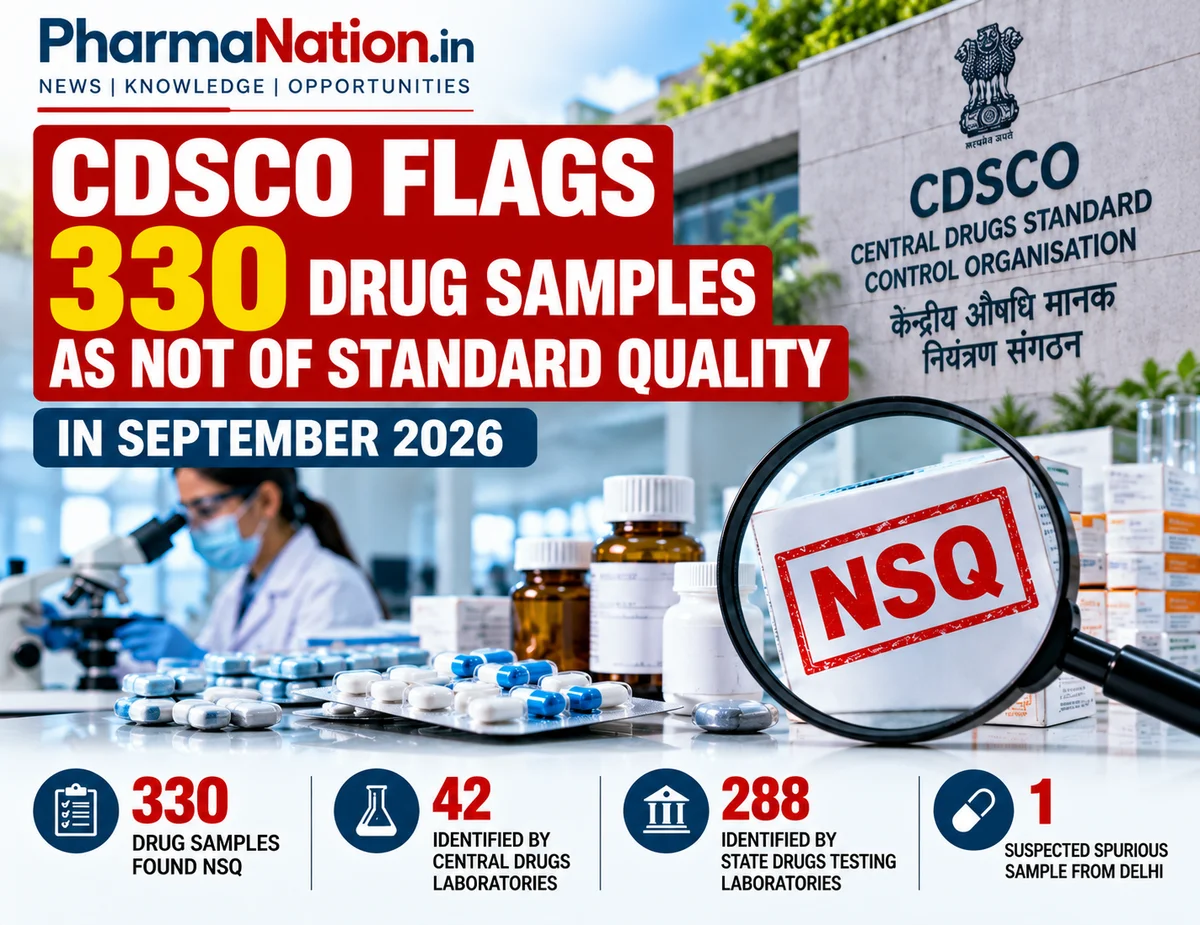
CDSCO Flags 330 Drug Samples as Not of Standard Quality in September 2026: What Pharmacists and Patients Should Know

Cancer Medicine Prices in India: Will the 30% Trade-Margin Cap Bring Relief to Patients?

India’s Clinical Research Revolution: NIPER Raebareli and AstraZeneca Join Hands to Strengthen 25 Clinical Trial Sites




Reader Comments
Comments are reviewed by our desk before they appear. Sign in with your mobile number to join the discussion.