CDSCO Flags 330 Drug Samples as Not of Standard Quality in September 2026: What Pharmacists and Patients Should Know
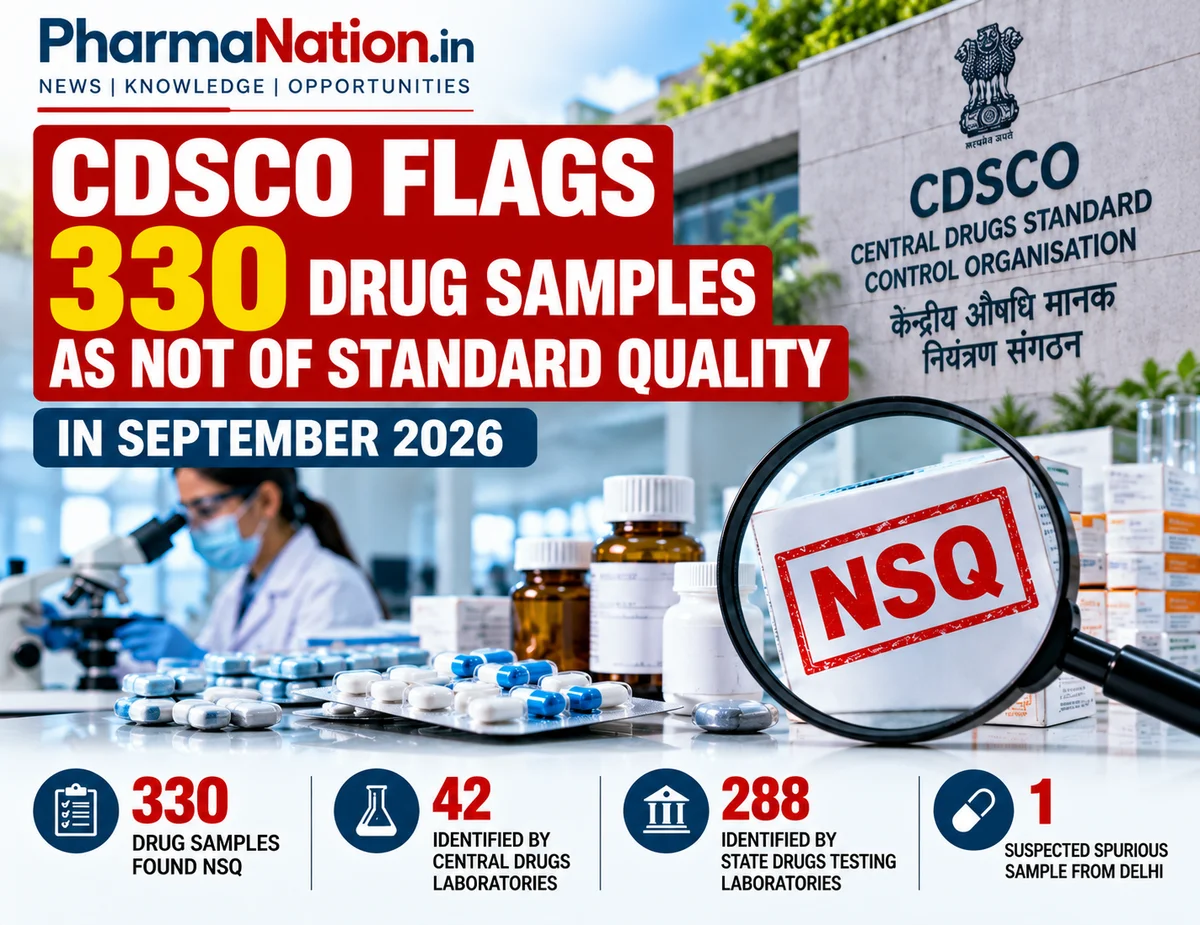
- CDSCO's September 2026 surveillance report identified 330 drug samples as Not of Standard Quality (NSQ).
- Central drug testing laboratories identified 42 samples, while state laboratories identified 288.
- One suspected spurious drug sample was also reported from Delhi.
- NSQ findings apply to the specific batch tested, not automatically to every batch of the same medicine.
- Pharmacists and medicine retailers should check official drug alerts and follow applicable regulatory instructions.
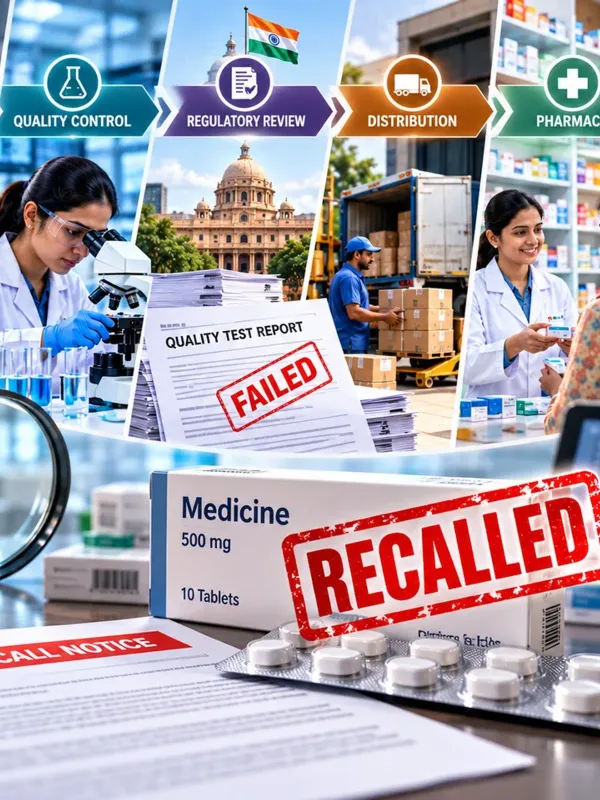
India's pharmaceutical quality surveillance system has reported another set of medicine quality failures. According to a report published on 23 October 2026, the Central Drugs Standard Control Organisation (CDSCO) identified 330 drug samples as Not of Standard Quality during routine surveillance for September 2026.
The reported findings included 42 samples identified by Central Drugs Laboratories and 288 identified by State Drugs Testing Laboratories. Authorities also identified one suspected spurious drug sample from the National Capital Territory of Delhi.
The findings form part of routine regulatory monitoring intended to identify medicines that fail prescribed quality standards and address suspected cases of counterfeit or unauthorised products.
Importantly, the regulatory findings relate to the particular samples and batches tested. They should not be interpreted as evidence that all medicines of a particular brand or formulation are unsafe.
Source: The New Indian Express, 23 October 2026.
What Does Not of Standard Quality (NSQ) Mean?
A medicine is classified as Not of Standard Quality when the tested sample fails to meet the applicable quality specifications.
These specifications may cover parameters such as:
Identity and strength of the active pharmaceutical ingredient.
Assay or the amount of active ingredient present.
Dissolution or drug-release characteristics.
Uniformity and other applicable pharmaceutical quality tests.
Microbiological or other requirements, where relevant to the product.
The exact reason for failure depends on the laboratory's findings and the applicable product specifications. Not every NSQ result means that the medicine contains the wrong ingredient; a sample may fail one or more specific quality tests.
Regulatory authorities investigate and take appropriate action according to the applicable law and the circumstances of each case.
NSQ Medicine vs Spurious Medicine: What Is the Difference?
The terms are related to medicine quality and authenticity, but they do not mean the same thing.
Not of Standard Quality (NSQ): A tested medicine sample fails one or more required quality standards. The reason must be assessed from the laboratory report.
Spurious medicine: A medicine is suspected or determined to be falsely represented or manufactured in circumstances that meet the applicable legal definition. This can include products made by unauthorised manufacturers using another company's brand identity.
The September findings included one reported spurious sample from Delhi. According to the published report, the matter was under investigation.
A suspected spurious product should not be described as conclusively proven counterfeit unless the authorities' findings support that conclusion.
What Should Pharmacists and Medical Store Owners Do?
Pharmacists and retailers play an important role in maintaining medicine quality throughout the supply chain. When a regulatory alert is issued, the following practices are useful.
1. Check official drug alerts
Regularly review the CDSCO's official website and the relevant state drug control authority's notices. Check the product name, manufacturer, batch number and stated reason for the quality failure.
Official reference: https://www.cdsco.gov.in/
2. Verify batch details carefully
Do not rely only on the medicine's brand name. Compare the exact batch or lot number, manufacturing details and other identifiers listed in the alert with the stock held in the pharmacy.
A report concerning one batch should not automatically be applied to all batches.
3. Follow the applicable regulatory instructions
If stock matches an official alert, follow the directions issued by the competent authority and contact the manufacturer or authorised supplier as appropriate. Segregate affected stock where required and maintain relevant purchase invoices, batch records and distribution information.
Do not independently declare an entire brand unsafe based on a report that concerns a different batch.
4. Maintain traceable purchase records
Purchase medicines from authorised and reliable suppliers. Retain invoices and batch-related records so products can be traced if a quality complaint, recall or regulatory investigation occurs.
5. Handle customer queries responsibly
If a patient asks whether their medicine is affected, verify the precise product and batch against the official notice. Avoid creating unnecessary alarm or offering unsupported assurances.
Where a patient's medicine is implicated in an official alert, direct them to their pharmacist or prescribing healthcare professional for advice on an appropriate replacement or next steps.
What Should Patients Know?
The latest report does not mean that every medicine available in the market is unsafe. It highlights why quality surveillance and batch-level traceability are important.
Patients can take sensible precautions:
Buy medicines from authorised pharmacies.
Check the packaging, expiry date and batch details.
Avoid products with suspicious packaging or altered labels.
Do not stop an essential prescribed medicine solely because of a general news report.
Consult a pharmacist or doctor if a medicine appears to match an official alert.
Patients should not attempt to determine a medicine's quality by appearance alone. Some quality defects cannot be identified by looking at the packaging or tablet.
Why Regular Drug Quality Testing Matters
India has a large and diverse pharmaceutical market, making effective quality surveillance important for public health and confidence in medicines.
Routine testing can help authorities identify quality failures, investigate suspected counterfeit products and take action when required. The findings also underline the importance of good manufacturing practices, reliable distribution channels, accurate records and effective communication between regulators and the pharmaceutical industry.
For manufacturers, distributors and retailers, the practical priority is to ensure that quality complaints are handled promptly and that any regulatory action is followed correctly.
For patients, clear and accurate communication is essential. Reports should inform the public without suggesting that every product or batch is affected when the evidence does not support that conclusion.
Frequently Asked Questions
1. How many drug samples were found NSQ in September 2026?
The reported September 2026 surveillance findings identified 330 drug samples as Not of Standard Quality: 42 through Central Drugs Laboratories and 288 through State Drugs Testing Laboratories.
2. Was a spurious medicine also reported?
Yes. The published report described one suspected spurious drug sample from Delhi. The matter was reported as under investigation.
3. Does an NSQ result mean every batch of the medicine is unsafe?
No. An NSQ finding applies to the tested sample or batch. Other batches require their own evidence-based assessment.
4. Where can pharmacists check drug quality alerts?
Pharmacists can consult the official CDSCO website and their respective state drug control authority for current notices and instructions.
5. Should patients stop taking their medicines after reading an NSQ report?
Patients should not stop prescribed treatment solely because of a general report. If their medicine appears to match an official alert, they should promptly consult their pharmacist or prescribing healthcare professional.
Conclusion
The identification of 330 NSQ drug samples in September 2026 reinforces the importance of ongoing medicine quality surveillance in India. The findings also highlight the need for pharmacists, retailers, manufacturers and patients to rely on accurate batch-level information rather than generalised claims about entire brands.
Regularly checking official alerts, maintaining traceable supply records and responding appropriately to confirmed quality concerns can help strengthen medicine safety and public confidence.
Source and Further Reading
The New Indian Express: CDSCO flags 330 drug samples as not of standard quality in September, published 23 October 2026.
CDSCO official website: https://www.cdsco.gov.in/
Editorial note: This article is an informational report based on publicly reported surveillance findings. Readers should consult the relevant official alert for the full product and batch details and any applicable regulatory instructions.
Esskay bhayana, being a registered pharmacist & having more than 30+ years of experience, covers news and latest innovations in the pharmaceutical industry.
More from this section

Cancer Medicine Prices in India: Will the 30% Trade-Margin Cap Bring Relief to Patients?

India’s Clinical Research Revolution: NIPER Raebareli and AstraZeneca Join Hands to Strengthen 25 Clinical Trial Sites

Biocon’s Perjeta Biosimilar Deal: A Legal Breakthrough, a Business Opportunity and a Bigger Question for Cancer Care


Reader Comments
Comments are reviewed by our desk before they appear. Sign in with your mobile number to join the discussion.