
CDSCO Cancels FatX Solution Registration Over Misleading Claims: Key Lessons for India’s Cosmetic Industry
CDSCO cancels FatX Solution’s import registration over claims of dissolving fat cells. Read the regulatory details and lessons for cosmetic brands in India.

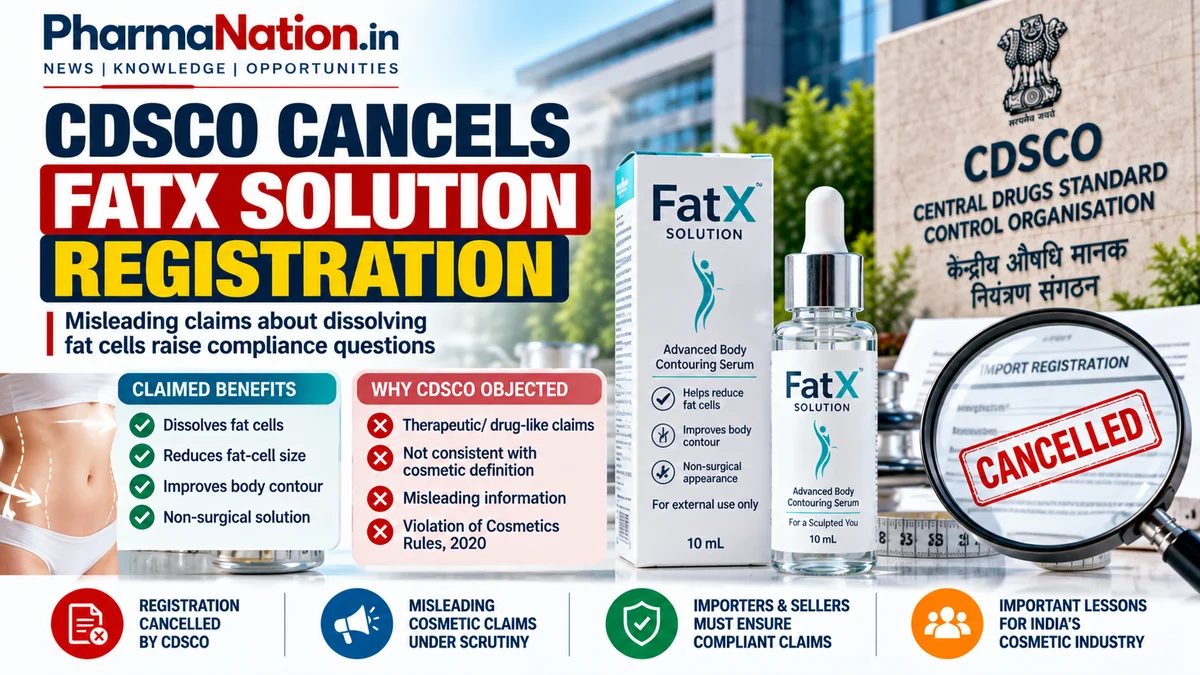
- *CDSCO cancelled FatX Solution’s import registration on 26 October 2026.
- *The regulator objected to claims that the product dissolves fat cells.
- *CDSCO considered these claims inconsistent with cosmetic classification.
- *The company’s response to the show-cause notice was found unsatisfactory.
- *Cosmetic businesses must ensure accurate, compliant product claims.
India’s pharmaceutical and cosmetic industries operate under regulatory requirements designed to protect consumers from misleading product claims. A recent action by the Central Drugs Standard Control Organisation (CDSCO) highlights why businesses must carefully check how their products are described and promoted online.
On 26 October 2026, CDSCO published an order cancelling the import registration of FatX Solution, registered under certificate number RC/COS-003300. The action concerned claims made on the importer’s website that the product could dissolve fat cells and reduce their size. According to the regulator, these were drug-related claims that did not fit the definition of a cosmetic.
The order names M/s Tekno Midas Aesthetics, based in New Delhi. The case offers important lessons for cosmetic importers, manufacturers, distributors, online sellers and marketing agencies operating in India.
Official source: CDSCO notice dated 26 October 2026.
What exactly did CDSCO find?
According to the regulatory order, FatX Solution had been registered for import into India under certificate RC/COS-003300 on 15 July 2022, with the registration originally valid until 14 July 2027.
During its review of the registration application and the importer’s official website, CDSCO observed differences between claims appearing on the marketed product’s online presentation and those on the approved product label.
The website described FatX Solution as a treatment for dissolving fat cells and reducing their size. CDSCO considered these to be drug claims rather than claims appropriate for a cosmetic product.
The authority had issued a show-cause notice to the firm on 10 August 2026. The firm submitted a response dated 1 September 2026, which the regulator described as inconclusive and unsatisfactory. The company also requested acceptance of the voluntary surrender of its registration certificate.
CDSCO subsequently cancelled registration certificate RC/COS-003300 with effect from the date of the order.
It is important to understand the scope of this action: the order concerns the product’s import registration and the claims identified by the regulator. It should not automatically be interpreted as a finding that every cosmetic product marketed for body contouring is unlawful.
Why is the difference between a cosmetic and a drug important?
Cosmetics and drugs are regulated according to their intended purpose, claims and applicable legal definitions. Businesses cannot necessarily classify a product as a cosmetic simply because it is applied to the skin.
Under Section 3(aaa) of the Drugs and Cosmetics Act, 1940, a cosmetic generally includes products intended to be applied to the human body for cleansing, beautifying, promoting attractiveness or altering appearance.
Claims suggesting that a product treats a condition or produces a biological or therapeutic effect may raise questions about whether the product falls outside the cosmetic category. The exact classification depends on the product and its claims, and must be assessed under the applicable regulatory framework.
Cosmetic claims versus drug-related claims
Consider the following simplified examples:
Appearance-focused claim: “Helps improve the appearance of the skin.”
Cosmetic positioning: “Designed to support a smoother-looking skin appearance.”
Biological or treatment claim: “Dissolves fat cells.”
Body-function claim: “Reduces the size of fat cells.”
The last two examples illustrate the type of language highlighted in the FatX Solution order. They are not a substitute for a legal classification assessment, and even appearance-focused claims must be truthful, supported and consistent with the product’s approved particulars.
The central lesson is that a product’s name, packaging and promotional language must match its lawful regulatory status.
What does Rule 36 of the Cosmetics Rules, 2020 say?
Rule 36 of the Cosmetics Rules, 2020 prohibits false or misleading claims by cosmetics.
This requirement matters across the entire marketing process, including packaging, product labels, websites, online marketplaces, advertisements, brochures and promotional content distributed through social media.
For example, a website may contain additional claims that do not appear on the approved product label. A business should not assume that online wording is acceptable simply because it is absent from the packaging.
The FatX Solution case demonstrates that regulators may examine how a product is presented on an importer’s website, not just the physical container or registration documents.
Businesses importing cosmetics into India should also remember that the applicable registration and compliance requirements must be satisfied before products are imported and marketed.
Reference: CDSCO — Cosmetics regulatory framework.
What should cosmetic manufacturers, importers and sellers do?
This case provides a practical opportunity for businesses to review their compliance systems.
1. Review all product claims
Check labels, product descriptions, websites, brochures and social media posts. Ensure that claims are consistent with the product’s approved particulars and applicable regulations.
2. Avoid unsupported medical language
Terms such as “treats,” “cures,” “destroys,” “dissolves” or “reduces cells” should not be used casually. Depending on the context, these words may imply effects that go beyond ordinary cosmetic purposes.
3. Verify registration and documentation
Importers should maintain current registration documents and confirm that the product being marketed matches the registered product, including relevant labelling and claims.
4. Review marketplace listings
Online sellers should check listings on e-commerce platforms and remove or correct inaccurate claims. A claim supplied by a manufacturer or distributor should not be accepted without appropriate verification.
5. Train marketing teams and agencies
Marketing personnel should understand the distinction between appearance-related claims and claims that could imply treatment or biological effects. Regulatory review should take place before promotional material goes live.
6. Establish a review and approval process
Businesses should maintain a documented procedure for approving labels, advertisements and website content. Regulatory or legal review can help identify risky wording before it reaches consumers.
What does this mean for India’s cosmetic industry?
India’s cosmetic market includes skincare, haircare, personal-care products and specialised beauty treatments. As online promotion expands, product descriptions can reach consumers quickly and influence purchasing decisions.
This makes accurate claims important for both consumer protection and business credibility. Misleading language may create regulatory risks, while unclear product positioning can damage trust among distributors, retailers and customers.
The FatX Solution order also sends a practical message to businesses selling imported products: regulatory compliance must cover marketing claims as well as product registration.
For pharmacy retailers, distributors and online sellers, checking registration status and promotional claims before listing a product is a sensible risk-management step. Businesses should also distinguish between an official regulatory order and unverified claims circulating on social media.
Frequently Asked Questions (FAQs)
1. Why did CDSCO cancel FatX Solution’s registration?
CDSCO stated that the importer’s website promoted the product with claims about dissolving fat cells and reducing their size. The authority considered these drug-related claims inappropriate for a product registered as a cosmetic.
2. Which company was named in the order?
The order names M/s Tekno Midas Aesthetics, New Delhi, and identifies registration certificate RC/COS-003300.
3. Which regulation prohibits misleading cosmetic claims?
Rule 36 of the Cosmetics Rules, 2020, prohibits false or misleading claims by cosmetics.
4. Does this order mean all body-contouring cosmetics are banned?
No. The order concerns FatX Solution’s registration and the specific claims examined by CDSCO. Other products must be assessed according to their own composition, intended purpose, claims and regulatory status.
5. What should online sellers do?
Sellers should verify registration and product documentation, check that listings match approved particulars, and avoid unsupported therapeutic or biological claims.
Conclusion
The CDSCO action against FatX Solution underlines an important principle for India’s cosmetic industry: a product’s marketing claims must remain within its lawful regulatory category.
Manufacturers, importers, distributors and online sellers should review their labels and digital content regularly. Clear, evidence-based and compliant communication helps protect consumers and reduces the risk of regulatory action.
This article is for informational purposes and is based on the CDSCO order dated 26 October 2026. Businesses should consult the applicable regulations and qualified regulatory professionals for product-specific advice.
Tags: CDSCO, FatX Solution, Cosmetic Regulations India, Cosmetics Rules 2020, Drug Claims, Pharma Regulatory News, Cosmetic Importers, Pharmaceutical Industry India
Esskay bhayana, being a registered pharmacist & having more than 30+ years of experience, covers news and latest innovations in the pharmaceutical industry.
More from this section
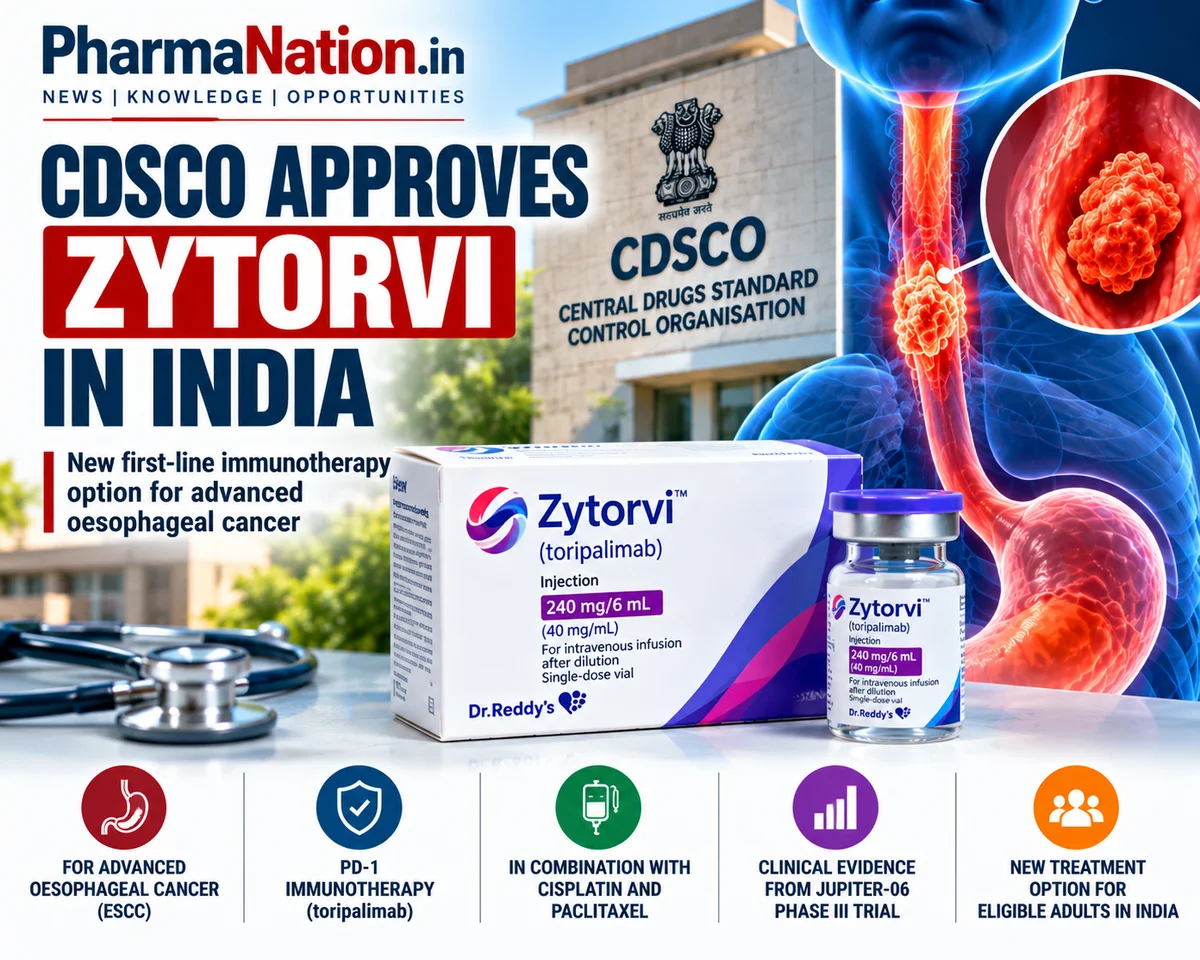
CDSCO Approves Zytorvi for Advanced Oesophageal Cancer in India
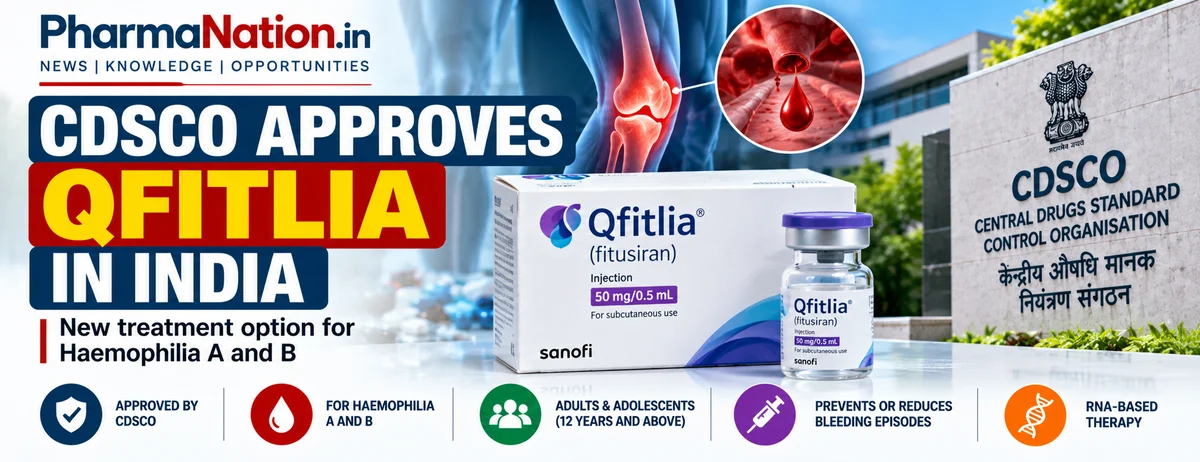
CDSCO Approves Qfitlia in India: New Haemophilia Treatment Explained
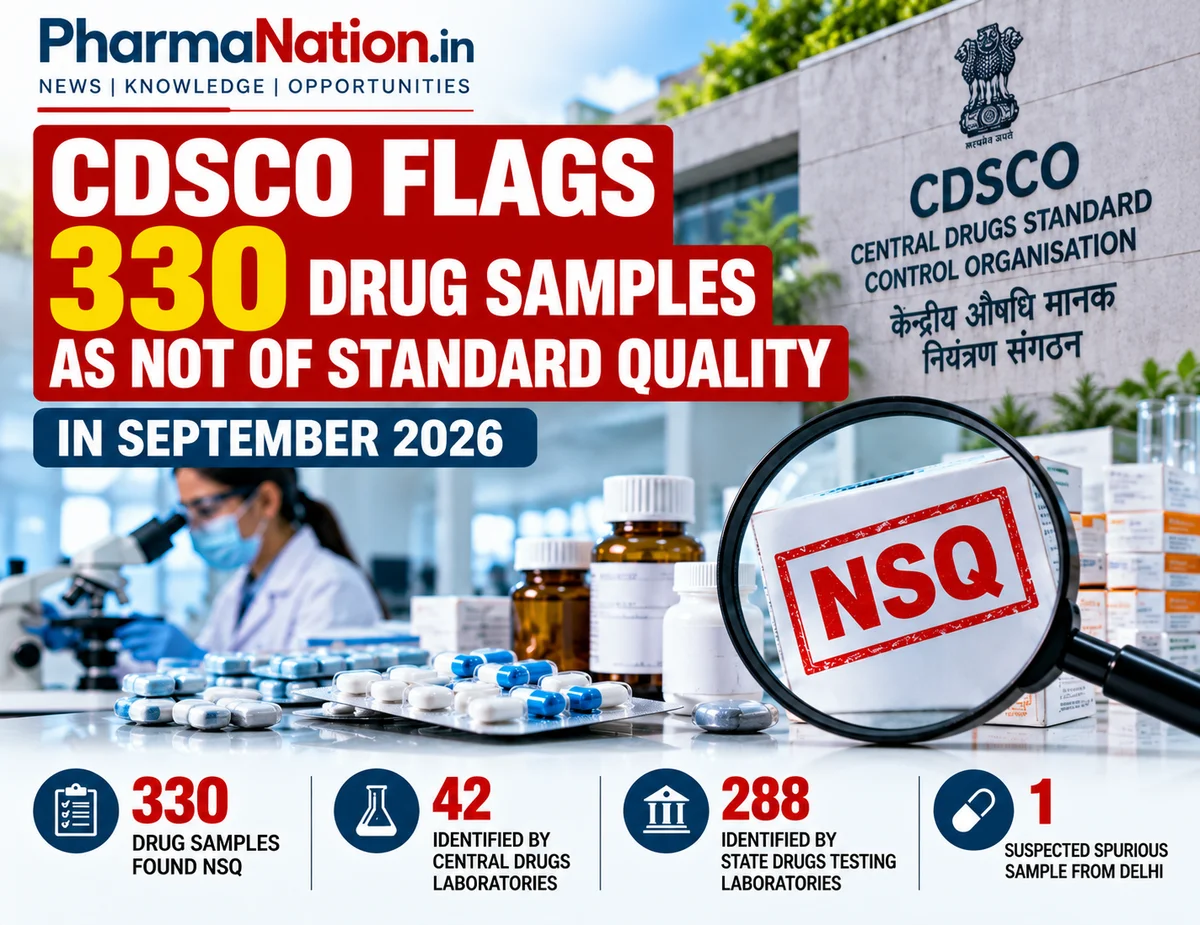
CDSCO Flags 330 Drug Samples as Not of Standard Quality in September 2026: What Pharmacists and Patients Should Know




Reader Comments
Comments are reviewed by our desk before they appear. Sign in with your mobile number to join the discussion.