
Pharmacy Career in India and Abroad: The Complete Roadmap from Diploma to PhD, Salaries, Jobs and Global Opportunities


Choosing pharmacy is not just about deciding which degree to pursue. It is about deciding what kind of professional you want to become: a registered pharmacist, pharmaceutical scientist, clinical researcher, drug-safety specialist, regulatory expert, entrepreneur, academic or international healthcare professional.
For some students, a Diploma in Pharmacy can provide an entry into the profession. Others may choose B.Pharm, Pharm.D, M.Pharm, an MBA or a PhD. Each route opens different opportunities, but none guarantees a particular salary or a successful career by itself.
The most important decision is to understand what you can do after every educational stage, which skills employers value, how much you might earn and when further education is actually worth the investment.
This PharmaNation guide covers the journey from Class 12 to advanced research, Indian employment opportunities, salary expectations and pharmacist-registration pathways in major international destinations.
Part 1: Pharmacy career opportunities in India
1. Is pharmacy a good career choice in India?
India has a large pharmaceutical ecosystem spanning generic medicines, active pharmaceutical ingredients (APIs), formulations, vaccines, biotechnology, clinical research, contract development and manufacturing, hospitals, retail pharmacy and medicine distribution.
However, pharmacy is not a single career. It contains several professional tracks, and the best route depends on your interests.
Career track | What you actually do | Who may enjoy it? |
|---|---|---|
Community pharmacy | Dispensing, prescription checks, patient counselling and inventory | People who enjoy patient interaction and practical healthcare |
Hospital pharmacy | Medication supply, inpatient dispensing and medicine-use support | Students interested in hospital systems |
Production | Manufacturing medicines and maintaining production records | People who like processes and operations |
Quality control (QC) | Testing raw materials, intermediates and finished products | Students interested in laboratory work |
Quality assurance (QA) | GMP compliance, documentation, deviations and audits | Detail-oriented students |
Regulatory affairs | Product registrations, submissions and regulatory compliance | Students who enjoy documentation and regulations |
Pharmacovigilance | Reviewing adverse-event reports and medicine-safety information | Students interested in safety and scientific assessment |
Clinical research | Supporting clinical trials and research operations | Students interested in human research and evidence |
Formulation R&D | Developing and improving dosage forms | Students who enjoy experimentation |
Medical writing | Preparing scientific, medical and regulatory documents | Strong writers with scientific understanding |
Pharma sales and marketing | Product promotion, market development and business planning | People with communication and commercial skills |
Entrepreneurship | Pharmacy retail, wholesale, healthcare supplies or other compliant businesses | People interested in business ownership |
A common mistake is to assume that a pharmacy graduate must work in a medical store. In reality, a pharmacy qualification can be the starting point for careers across manufacturing, research, compliance, healthcare and business.
The challenge is choosing the right pathway early enough to develop relevant experience.
2. What can you do after Class 12?
Students generally consider D.Pharm, B.Pharm or Pharm.D after completing the required school-level science subjects.
Option A: Diploma in Pharmacy (D.Pharm)
D.Pharm is generally a two-year programme after Class 12, followed by the applicable practical training and registration requirements.
It can suit students who want a shorter route into pharmacy practice or wish to begin working before considering further study.
Option B: Bachelor of Pharmacy (B.Pharm)
B.Pharm is generally a four-year undergraduate degree. It provides a broader foundation for pharmaceutical manufacturing, quality, regulatory affairs, drug safety, research support, sales and further education.
For students who are uncertain whether they prefer patient-facing work or pharmaceutical industry roles, B.Pharm can provide a broad starting point.
Option C: Doctor of Pharmacy (Pharm.D)
The regular Pharm.D programme in India is generally six years after the required school-level qualification, including academic study and practical clinical training.
It is more clinically oriented than the conventional B.Pharm route and may suit students interested in clinical pharmacy, hospital practice, medication management and clinical research.
Important: Pharm.D in India and the professional Doctor of Pharmacy qualification in the United States are not automatically interchangeable for registration purposes. International recognition must be checked with the relevant regulator.
The Pharmacy Council of India (PCI) lists the approved pharmacy courses and applicable education regulations on its official website: Pharmacy Council of India.
3. Career after D.Pharm: Start working or continue studying?
D.Pharm is often chosen by students who want to enter the workforce relatively quickly.
Jobs after D.Pharm
Subject to applicable eligibility and registration requirements, possible roles include:
Community or retail pharmacist.
Hospital dispensing pharmacist.
Pharmacy assistant or pharmacy operations employee, where the role does not require pharmacist registration.
Inventory and medicine-store operations.
Pharmaceutical sales and field support.
Pharmacy entrepreneurship, subject to licensing requirements.
A diploma holder may also explore additional education, including the applicable route into B.Pharm.
Indicative salary after D.Pharm
Role | Approximate annual earnings |
|---|---|
Entry-level retail pharmacist | ₹1.5–3 lakh |
Hospital pharmacy role | ₹1.5–3 lakh |
Pharmacy operations or inventory role | ₹1.8–3.2 lakh |
Experienced store supervisor | ₹2.5–4.5 lakh |
These are broad planning estimates, not official pay scales or guaranteed offers. Salaries vary with the city, employer, working hours, registration status, experience and responsibilities.
Actual offers may fall below these ranges, particularly in smaller establishments. Government appointments, where available, follow the relevant recruitment rules and pay structure.
What should a D.Pharm student do next?
Choose D.Pharm if you value early entry into the workforce—but do not stop learning after receiving the diploma.
A sensible strategy is to:
Complete the required training and registration process.
Gain practical experience in dispensing, stock management and prescription handling.
Learn inventory software, billing and basic business operations.
Improve communication and patient-counselling skills.
Decide whether to continue into B.Pharm or develop a longer-term career in pharmacy operations.
If your ambition is pharmaceutical R&D, advanced formulation development or a research-oriented career, plan your higher education accordingly. A diploma alone is not a substitute for the specialised qualifications required for many such roles.
4. Career after B.Pharm: The most important decision point
B.Pharm graduates often face a major question: should they take a job immediately, pursue M.Pharm, prepare for competitive examinations, enter clinical research or plan to work abroad?
There is no universal answer.
Pathway 1: Enter the pharmaceutical industry
B.Pharm graduates can apply for eligible entry-level roles in:
Production and manufacturing: Supporting manufacturing operations, batch documentation, process monitoring and production schedules.
Quality control: Performing or supporting laboratory testing, analytical procedures, sample management and documentation.
Quality assurance: Maintaining records, assisting with audits, reviewing batch documentation and supporting compliance systems.
Regulatory affairs: Supporting dossier preparation, product registration, labelling and regulatory submissions.
Pharmacovigilance: Processing safety cases, reviewing medical information and supporting drug-safety operations.
Clinical research: Working in trial coordination, clinical operations, data management and related research support roles.
Eligibility depends on the employer, role and applicable regulations. Some positions prefer M.Pharm, Pharm.D, specialised training or previous experience.
Pathway 2: Continue with M.Pharm
M.Pharm generally takes two years after B.Pharm.
It may be useful when you have a specific technical or research direction in mind. It is less valuable when pursued simply because you do not know what else to do.
Pathway 3: Prepare for government recruitment
Eligible candidates may pursue recruitment opportunities in public hospitals, government laboratories, regulatory bodies and other public-sector organisations.
Depending on the post, recruitment may involve written examinations, interviews, experience requirements and specific educational eligibility.
A B.Pharm qualification does not automatically make someone eligible for every Drug Inspector, government pharmacist or laboratory post. Always read the exact recruitment notification.
Pathway 4: Enter sales, marketing or business
Pharmaceutical companies employ graduates in field sales, product support, institutional business and commercial operations.
Students who enjoy communication, negotiation and business strategy may find these roles attractive. Career progression can lead towards product management, regional business management, key-account management or marketing leadership.
Indicative salary after B.Pharm
Role | Approximate annual earnings |
|---|---|
Production or QC trainee | ₹2–3.8 lakh |
QA or QC executive | ₹2.5–4.5 lakh |
Regulatory affairs associate | ₹3–5 lakh |
Pharmacovigilance associate | ₹2.5–5 lakh |
Clinical research entry-level role | ₹2.5–4.5 lakh |
Medical representative | ₹2.5–5 lakh, potentially with incentives |
Retail or hospital pharmacist | ₹1.8–4 lakh |
These are indicative market-planning ranges. They are not a promise that a B.Pharm graduate will receive a particular offer.
Salary estimates published by employment-data platforms show substantial variation by job title, city, employer and experience. For example, published pharmacist and pharmacovigilance salary data illustrate how different the compensation can be between patient-facing roles and specialised industry roles. Pharmacist salary data | Pharmacovigilance salary data.
The B.Pharm skill advantage
Two graduates with the same degree may receive very different opportunities because their practical skills differ.
Build a portfolio of relevant capabilities:
For QA/QC: GMP, documentation, laboratory methods, analytical instruments and data integrity.
For regulatory affairs: Dossier structure, labelling requirements, regulatory databases and scientific writing.
For pharmacovigilance: Adverse-event concepts, case processing, medical terminology and safety documentation.
For clinical research: Good Clinical Practice, trial documentation, research ethics and data handling.
For sales and marketing: Product knowledge, communication, territory planning, customer relationships and market analysis.
Certificates can support your application, but they rarely replace practical ability. Before paying for a course, inspect actual job advertisements and identify the skills employers repeatedly request.
5. Career after Pharm.D: Clinical pharmacy and research
Pharm.D is designed with a stronger clinical orientation. Its potential applications include hospital pharmacy, clinical pharmacy services, medication-use review, clinical research and related healthcare roles.
The extent of clinical-pharmacy responsibilities varies between Indian institutions. The qualification does not automatically grant the same scope of practice or recognition in every country.
Potential career pathways
Clinical pharmacy and medication-use support.
Hospital pharmacy services.
Clinical research coordination and operations.
Drug information services.
Pharmacovigilance and drug safety.
Medical writing and clinical documentation.
Further specialisation or research.
Some positions may require additional training, experience or postgraduate study.
Indicative salary after Pharm.D
Entry-level hospital or clinical roles may broadly fall around ₹2.5–5 lakh per year, while specialised industry and research positions may offer more. The actual offer depends heavily on the role, employer, city and experience.
Do not assume that the word “Doctor” guarantees a higher salary. Pharm.D is a professional pharmacy qualification; it is not an MBBS degree and does not confer a medical doctor's licence.
Should you choose Pharm.D or B.Pharm?
Consider Pharm.D if you are genuinely interested in clinical pharmacy, hospital-based medicine use and patient-facing healthcare.
Consider B.Pharm if your interests lean towards pharmaceutical manufacturing, formulation, quality, regulatory affairs, industry research or business.
Neither route is universally superior. The right choice is the one that fits the work you actually want to do.
6. M.Pharm: Which specialisation should you choose?
M.Pharm is generally a two-year postgraduate qualification after B.Pharm. It can help students build specialised knowledge and prepare for advanced technical, research, regulatory or academic roles.
The specialisation should be chosen based on the type of work you want after graduation—not merely the name of the college or the popularity of a subject.
Specialisation | Potential career direction |
|---|---|
Pharmaceutics | Formulation development, drug delivery, process development and research |
Pharmaceutical Chemistry or Medicinal Chemistry | Drug discovery support, synthesis and analytical research, subject to role requirements |
Pharmacology | Preclinical research, pharmacological assessment and related scientific work |
Pharmaceutical Analysis | Analytical development, QC, method development and stability studies |
Quality Assurance | Pharmaceutical quality systems, compliance, validation and audits |
Regulatory Affairs | Regulatory submissions, product registration and lifecycle management |
Pharmacy Practice | Clinical pharmacy, medication-use research and practice-oriented roles |
Pharmacognosy | Natural products, herbal research and phytochemical analysis |
Pharmaceutical Biotechnology | Biologics, biotechnology-related manufacturing and research |
Clinical Research | Trial operations, clinical research and evidence generation |
Programme names, eligibility and available specialisations vary by institution. Verify the approved curriculum and admission rules before applying.
The National Institute of Pharmaceutical Education and Research (NIPER) offers postgraduate and doctoral programmes across areas such as pharmaceutics, pharmaceutical analysis, pharmacology and toxicology, regulatory toxicology, pharmacoinformatics and pharmaceutical management.
Official references: NIPER academic programmes | NIPER JEE 2026 information brochure.
Salary after M.Pharm
Indicative annual ranges may look like this:
Role | Approximate annual earnings |
|---|---|
Technical or analytical executive | ₹3–5.5 lakh |
QA/QC specialist | ₹3.5–6.5 lakh |
Regulatory affairs specialist | ₹4–8 lakh |
Formulation or research associate | ₹3.5–7 lakh |
Pharmacovigilance or drug-safety specialist | ₹3.5–7 lakh |
Research or teaching position | Highly dependent on institution and eligibility |
These ranges are illustrative. An M.Pharm graduate from a well-connected institution with relevant projects and industry exposure may have better opportunities than a graduate without practical experience, but college reputation alone does not guarantee a high-paying job.
Is M.Pharm worth it?
It can be worth the investment if it helps you access a specific role that requires or rewards postgraduate expertise.
Before enrolling, answer four questions:
Which jobs do graduates of this programme actually obtain?
Are the placements relevant to my preferred career?
Does the course offer meaningful laboratory, research or industry exposure?
What is the total cost, including fees, accommodation and the income I give up while studying?
A postgraduate degree should solve a career problem—not merely postpone the decision of what to do next.
7. PhD in Pharmacy: For research, innovation and scientific leadership
A PhD is appropriate for people who want to conduct original research, lead scientific programmes, pursue advanced academic careers or develop specialised expertise.
It is not compulsory for most entry-level pharmaceutical-industry jobs.
Potential areas include:
Novel drug delivery systems.
Formulation and process development.
Medicinal chemistry and drug discovery.
Pharmacology and toxicology.
Pharmaceutical biotechnology.
Clinical and translational research.
Pharmacoinformatics and computational approaches.
Natural products and pharmaceutical sciences.
Careers after PhD
A PhD can support pathways into:
Research scientist and senior research roles.
Academic teaching and research, subject to applicable recruitment criteria.
Drug discovery and formulation research.
Scientific project leadership.
Regulatory or scientific consulting.
Research collaboration and innovation programmes.
Some research positions may require postdoctoral experience, specialised technical expertise or a strong publication and project record.
Indicative earnings after PhD
There is no single salary range for all PhD graduates.
Entry-level research appointments may pay around ₹4–8 lakh per year in some settings, while industry scientist roles may offer approximately ₹6–15 lakh or more, depending on expertise, employer and location. Senior research and leadership roles can pay substantially more, but they generally require experience and demonstrable results—not just the doctorate.
These figures are broad estimates rather than official pay scales. Academic appointments may follow institutional or government pay structures, while private-industry salaries vary widely.
Should you pursue a PhD immediately?
A PhD is a long-term investment in research capability. Before starting, consider whether you enjoy experimental work, reading scientific literature, solving uncertain problems and documenting results.
If your primary goal is to enter the workforce quickly or move into business management, a PhD may not be the most efficient route.
8. Beyond PhD: Postdoctoral research, management and entrepreneurship
Pharmacy careers do not end with a doctorate.
Postdoctoral research
A postdoctoral position may help researchers develop deeper expertise, publish original work, establish international collaborations and qualify for certain independent research roles.
It is most useful when the target career genuinely values advanced research experience.
MBA and pharmaceutical management
A pharmacy graduate can pursue management education to move towards commercial, strategic or operational leadership.
Potential roles include product management, market access, business development, supply-chain management, consulting and pharmaceutical operations.
An MBA is not automatically better than M.Pharm. It is better for a different set of goals.
Intellectual property and patent-related work
Pharmaceutical knowledge can be useful in patent research, technical analysis, intellectual-property support and technology-transfer activities. Specific legal roles may require additional qualifications or authorisation.
Entrepreneurship
A pharmacy qualification can also be the foundation for building a business, such as a retail pharmacy, pharmaceutical distribution company, healthcare-supplies operation, compliant e-commerce business or specialised service.
However, entrepreneurship introduces financial and regulatory responsibilities. A pharmacy qualification alone does not authorise every kind of medicine sale, manufacturing activity or online pharmacy operation. Obtain the required licences and comply with applicable rules.
9. Government jobs after pharmacy
Students interested in job security and public service may investigate eligible positions in government hospitals, public-sector organisations, regulatory bodies, drug-testing laboratories and research institutions.
Possible opportunities include pharmacist posts, laboratory-related roles, research appointments and regulatory positions. Eligibility differs considerably.
For every vacancy, verify:
Required degree and subject specialisation.
State or central recruitment conditions.
Registration requirements.
Age limits and applicable relaxations.
Experience requirements.
Written examinations and interview procedures.
Pay level and probation conditions.
Do not prepare for a particular post based only on coaching advertisements or social-media claims. The official recruitment notification is the authoritative source for eligibility and salary.
For government pharmacist roles, a relevant pharmacy qualification and registration may be necessary. For Drug Inspector or other regulatory positions, the precise legal and educational requirements of the notification must be checked.
10. How to build a pharmacy career that pays better
A degree is only one part of professional value. The combination of qualification, skills, experience and the ability to solve business or scientific problems often determines career progression.
The first two years after graduation
Focus on becoming employable.
Learn the basic workflows of your chosen department.
Build accuracy in documentation and communication.
Understand the applicable quality or regulatory framework.
Seek internships and projects that resemble real work.
Learn from experienced colleagues and ask for feedback.
Keep records of projects, responsibilities and achievements that can be shared appropriately in future interviews.
Years three to five
Move from routine execution towards ownership.
Examples include handling a quality investigation, managing a regulatory submission component, coordinating a clinical-trial activity, improving a manufacturing process or taking responsibility for a business territory.
At this stage, choose additional training based on the next role you want—not on the number of certificates you can collect.
Beyond five years
Consider specialisation, team leadership, cross-functional projects, management education or research qualifications if they serve a clear purpose.
A higher salary usually comes with greater responsibility, scarce expertise, commercial impact or leadership. Merely accumulating years of service does not guarantee promotion.
Part 2: Pharmacy career abroad
11. First understand the difference between working in pharma and practising as a pharmacist
This distinction can save students significant time and money.
Route A: Registered pharmacist practice
If you want to dispense medicines, provide regulated pharmacist services or hold a pharmacist position in a jurisdiction where registration is required, you must satisfy that jurisdiction's licensing and registration rules.
Route B: Pharmaceutical-industry employment
Roles in drug safety, regulatory affairs, clinical research, medical writing, manufacturing, quality systems, data management and pharmaceutical business may have different qualification and licensing requirements.
Some industry jobs may be accessible without registering as a practising pharmacist. Others may require local experience, professional registration, a particular degree or additional credentials.
Therefore, do not assume that you must complete an overseas pharmacist-registration examination before applying for every pharmaceutical-industry job. Equally, do not assume that a pharmacy degree alone qualifies you for a regulated pharmacist position.
12. United Kingdom: The pharmacist-registration pathway
The UK offers opportunities in community pharmacy, hospitals, primary care, pharmaceutical companies and research.
Internationally qualified pharmacists may need to complete the applicable overseas qualification assessment and training pathway before registration. The Overseas Pharmacists Assessment Programme (OSPAP) has been part of the route for eligible internationally qualified pharmacists, followed by the required training and registration assessment.
The General Pharmaceutical Council regulates pharmacist registration in Great Britain. Requirements and routes can change, so candidates should verify the pathway applicable to their qualification and circumstances.
Official source: General Pharmaceutical Council.
Career-planning advice: Compare the total cost of qualification assessment, courses, training, examinations, living expenses and the time required before you can practise. Also explore industry roles if your main goal is pharmaceutical employment rather than patient-facing practice.
13. Australia: Assessment, supervised practice and registration
Australia has opportunities in community and hospital pharmacy, industry, research and healthcare services.
For graduates whose pharmacy qualifications were obtained outside Australia and New Zealand, the Australian Pharmacy Council identifies the applicable assessment pathway. Depending on the route, applicants may need examinations, English-language evidence, supervised practice and registration through the relevant authorities.
The Australian Pharmacy Council notes that the process can take months or years, depending on individual circumstances, examination performance, employment availability and visa arrangements.
Official sources: Australian Pharmacy Council | Pharmacy Board of Australia.
Career-planning advice: Do not budget only for the examination. Include document assessment, travel, supervised practice, relocation and the possibility that finding an approved placement or suitable job may take time.
14. Canada: A certification pathway undergoing change
Canada offers careers in community pharmacy, hospitals, industry, research and other healthcare settings. Pharmacist registration is governed by provincial or territorial regulators, and internationally educated applicants must meet the applicable certification and registration requirements.
A significant change announced by the Pharmacy Examining Board of Canada (PEBC) takes effect in January 2027. Under the new pathway, eligible international pharmacy graduates who have not completed the previous evaluating examination will proceed from document evaluation to the Pharmacist Qualifying Examination pathway. The October 2026 evaluating examination is the last one offered under the previous structure.
This change affects PEBC certification; it does not automatically grant a licence to practise. Provincial registration requirements still apply.
Official source: PEBC — New Certification Pathway for International Pharmacy Graduates.
Career-planning advice: Check the official pathway for your exact status before booking examinations or paying a consultant. Also investigate industry jobs in clinical research, drug safety, regulatory affairs and pharmaceutical operations if pharmacist registration is not essential to your target role.
15. United States: A structured but demanding licensing route
The United States has opportunities in community and hospital pharmacy, pharmaceutical companies, managed care, clinical research and drug development.
International pharmacy graduates generally need to meet the applicable Foreign Pharmacy Graduate Examination Committee certification requirements before progressing through the relevant examinations and state-board licensing process.
Credential evaluation, English-language testing, examinations and state-specific requirements may form part of the process. A degree from India does not automatically authorise pharmacist practice in the US.
Official source: National Association of Boards of Pharmacy — Foreign Pharmacy.
Career-planning advice: Identify the state in which you intend to work and verify its requirements before estimating the cost or duration of the process.
16. Salary abroad: Look beyond currency conversion
Overseas salaries may appear much higher when converted into rupees. That comparison is incomplete.
A meaningful comparison should include:
Gross salary and take-home pay.
Income tax and compulsory deductions.
Rent, utilities, food and transport.
Health insurance and other living expenses.
Examination, registration and training costs.
Visa and relocation expenses.
Time spent studying or training without full-time earnings.
Whether the job is guaranteed, temporary or dependent on sponsorship.
For example, a salary that appears impressive after currency conversion may leave limited savings in a high-cost city. Conversely, an industry role with a lower headline salary may offer a faster entry into employment without the full cost of pharmacist registration.
Because pay varies by location, employer and professional status, students should consult current official salary information, employer vacancies and local cost-of-living estimates rather than relying on a single internet salary figure.
17. Which route should you choose? A practical decision guide
Your main goal | Path worth investigating |
|---|---|
Enter pharmacy practice sooner | D.Pharm, subject to applicable eligibility and registration |
Keep broad industry options open | B.Pharm |
Work in clinical pharmacy | Pharm.D or another route that meets the intended role's requirements |
Enter specialised technical or research roles | B.Pharm followed by a relevant M.Pharm or other suitable postgraduate qualification |
Build a research career | Research-focused postgraduate study and, where appropriate, PhD |
Move into commercial leadership | Pharmacy qualification plus relevant business experience; MBA if justified |
Work abroad as a registered pharmacist | Qualification-specific pathway set by the destination regulator |
Work abroad in pharmaceutical industry | Target-role skills, relevant experience and employer-specific eligibility |
Start a pharmacy or distribution business | Appropriate qualification, market understanding, capital and all required licences |
18. The 90-day plan for students who feel confused
If you are a pharmacy student or recent graduate and cannot decide what to do next, do not make an expensive decision immediately.
Days 1–15: Explore
Choose three possible careers—for example, regulatory affairs, pharmacovigilance and hospital pharmacy. Read job descriptions and note their qualification, skill and experience requirements.
Days 16–30: Speak to professionals
Talk to people already working in those fields. Ask what they do during a typical day, which skills matter most, how they entered the profession and what they would do differently.
Days 31–60: Test your interest
Complete a relevant academic project, practical exercise, internship or introductory course. For overseas plans, read the regulator's official pathway and estimate the total cost.
Days 61–90: Choose a direction
Compare the options on four criteria: interest, employment prospects, financial cost and long-term growth. Select one primary path and one backup.
This exercise will not remove every uncertainty, but it can prevent decisions based only on peer pressure, social-media salary claims or the prestige of a degree title.
PharmaNation Take: Your degree is the beginning, not the destination
There is no single pharmacy qualification that guarantees success. D.Pharm can be a practical starting point; B.Pharm offers a broad industry foundation; Pharm.D can suit clinically oriented students; M.Pharm can deepen technical expertise; and a PhD can support advanced research. Management, entrepreneurship and international opportunities create additional pathways.
The strongest career decision is one that connects your education to the work you want to perform.
Before choosing another degree, ask yourself:
What job do I want to be qualified for?
Does that job actually require another degree?
What skills or experience do employers expect?
What is the total cost of the next step?
What will I be able to do after completing it that I cannot do today?
For students planning to move abroad, the same principle applies: understand the exact registration route, verify the official requirements and calculate the full financial commitment before making a decision.
The PharmaNation recommendation: Do not collect qualifications without a plan. Build a career in stages—learn the fundamentals, acquire practical skills, gain relevant experience, specialise when it adds value, and pursue further education only when it supports a clearly defined goal.
Pharmacy can lead to patient care, scientific research, pharmaceutical manufacturing, regulatory work, business leadership and international employment. Your task is not to pursue every possibility. It is to choose the path that best matches your strengths, circumstances and ambitions.
Important disclaimer
Salary figures in this article are indicative estimates for career planning, not guaranteed earnings or official pay scales. Actual compensation depends on employer, location, qualifications, experience and market conditions. Professional registration and education requirements may change. Verify current rules with the Pharmacy Council of India, the relevant State Pharmacy Council, destination-country regulators and official recruitment notices before making educational, financial or career decisions.
Official resources for further research
PharmaNation — Connecting Pharmaceutical Knowledge with Industry Insights.
Esskay bhayana, being a registered pharmacist & having more than 30+ years of experience, covers news and latest innovations in the pharmaceutical industry.
More from this section

Pharma Career in India: Jobs, Salary, Skills & Future Growth

PharmaNation Daily News Briefing ( Friday, 16 October 2026 )
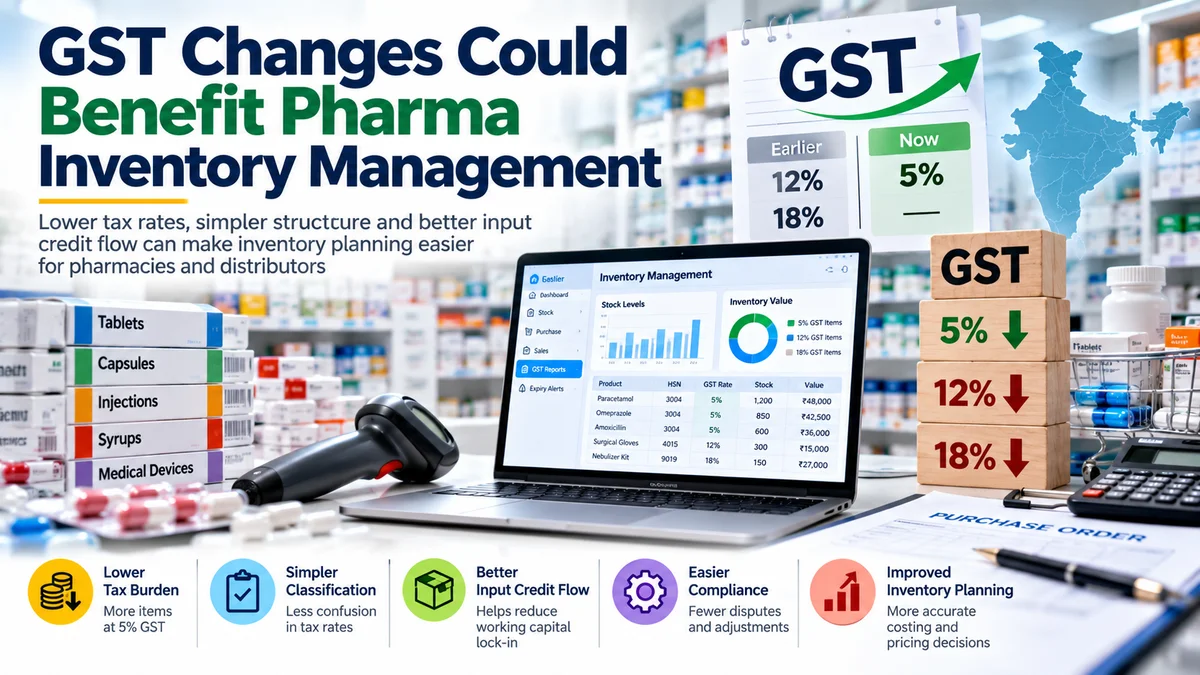
GST Changes Could Benefit Pharma Inventory Management: What Wholesalers and Retailers Need to Know


Reader Comments
Comments are reviewed by our desk before they appear. Sign in with your mobile number to join the discussion.