India Rejects BPaL TB Drug Patent Application: Impact on Generic Medicines
India’s Patent Office has rejected a patent application for the BPaL drug combination used against drug-resistant TB. Understand the decision, treatment benefits and implications for medicine access.
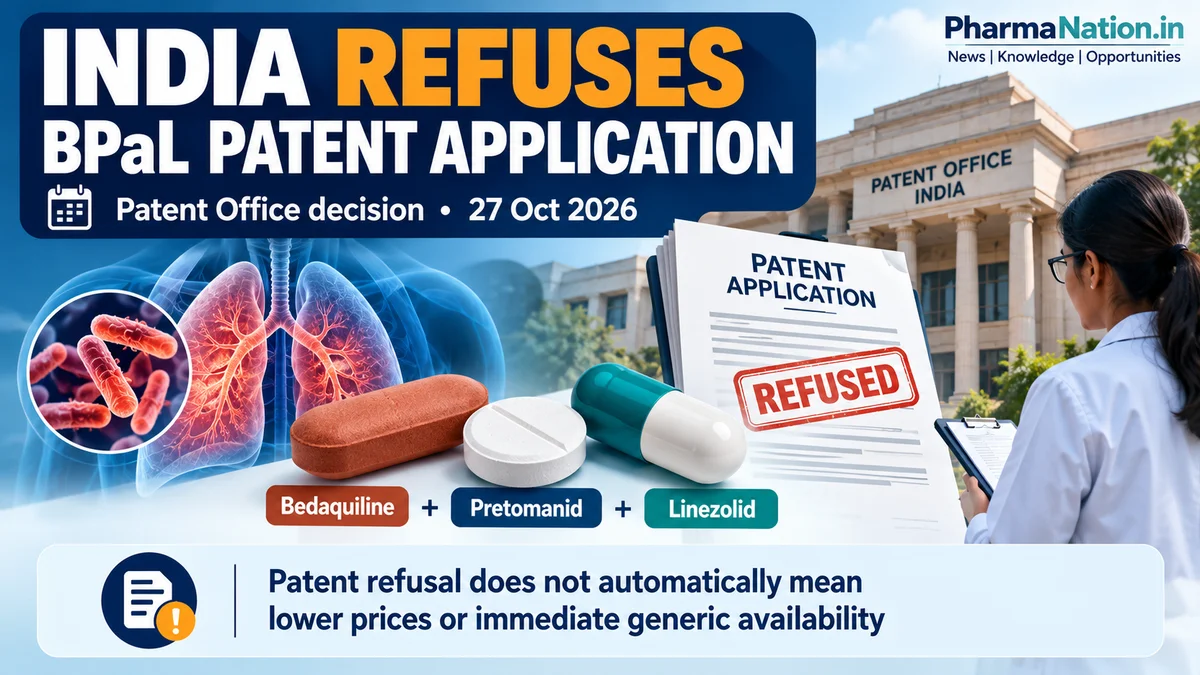
India’s pharmaceutical and public-health sectors are watching an important development in the fight against drug-resistant tuberculosis. The Indian Patent Office has refused a patent application relating to the BPaL combination, which uses three medicines to treat eligible patients with drug-resistant TB.
The decision was issued on 27 October 2026, following challenges filed by patient groups and public-health organisations. The application was refused under Section 15 of the Patents Act, 1970, after objections concerning patentability were considered. The decision may remove one potential patent barrier to competition, but it does not automatically reduce medicine prices or guarantee immediate access to generic products.
For India, which carries a substantial share of the global tuberculosis burden, the issue goes beyond intellectual property. It raises important questions about treatment affordability, pharmaceutical innovation and access to essential medicines.
1. What Is BPaL and Why Is It Important?
BPaL is a combination of three medicines:
Bedaquiline (B): An anti-tuberculosis medicine used against susceptible strains of TB bacteria.
Pretomanid (Pa): A medicine developed for use in specific drug-resistant TB treatment regimens.
Linezolid (L): An antibiotic that is used as part of certain treatment combinations.
The regimen is intended for eligible patients with particular forms of drug-resistant tuberculosis. Drug-resistant TB occurs when TB bacteria do not respond to medicines that would normally be effective.
Historically, some patients required lengthy treatment courses involving several medicines and, in certain regimens, injectable drugs. Shorter all-oral regimens can reduce the treatment burden for eligible patients.
The World Health Organization recommends BPaL for selected patients with multidrug- or rifampicin-resistant TB and additional fluoroquinolone resistance. A related regimen, BPaLM, adds moxifloxacin and is recommended for eligible patients according to clinical criteria and drug-susceptibility results. <Cite refs={["turn209158search2","turn209158search3"]}/>
These treatments are not suitable for every TB patient. Eligibility, monitoring and medicine selection must follow current clinical guidance.
2. Why Did India Reject the Patent Application?
The application was filed by the Global Alliance for TB Drug Development, commonly known as TB Alliance. It sought patent protection for a combination antibacterial composition involving bedaquiline, pretomanid and linezolid.
The application, numbered IN201817014361, was filed on 16 April 2018. Two pre-grant oppositions were subsequently filed in 2020. Indian patent law allows interested parties to oppose a patent application before it is granted.
The challengers raised objections involving novelty, inventive step, patentability and the adequacy of the technical disclosure. They questioned whether combining known medicines in a particular formulation established a sufficiently new and inventive contribution to qualify for a patent.
According to reporting by The Indian Express and ETPharma, the Patent Office refused the application after considering the objections and finding that the application did not satisfy the applicable requirements of patent law. <Cite refs={["turn352585view0","turn352585view1"]}/>
The decision concerns the specific patent application and claims examined by the Patent Office. It should not be interpreted as a general rejection of pharmaceutical patents or as a finding that all fixed-dose combinations are unpatentable.
3. What Does This Mean for Generic Drug Manufacturers?
A patent can give its holder exclusive rights over a qualifying invention for a defined period, subject to the applicable law. When a patent application is refused, that particular application does not provide the applicant with the exclusive rights it sought.
This may create more room for other companies to assess whether they can develop or supply relevant products without infringing that refused application.
However, manufacturers must still consider other valid patents, regulatory requirements, product quality, manufacturing permissions and applicable clinical or procurement rules. The refusal of one application does not establish that every possible product containing the same medicines can immediately be manufactured and sold.
For Indian pharmaceutical companies, the decision highlights the importance of carefully reviewing patent claims and the broader intellectual-property landscape before investing in a product.
4. Will TB Medicines Become Cheaper Immediately?
No immediate price reduction should be assumed.
The patent refusal removes one potential barrier associated with the specific application, but several steps remain between a patent decision and affordable medicines reaching patients.
Manufacturers need the ability to produce quality-assured products. Relevant regulatory requirements must be met, procurement systems must place orders, and medicines must be distributed reliably to treatment centres.
Existing patents or other legal restrictions may also affect particular products or markets. The commercial price will depend on factors such as manufacturing costs, competition, procurement arrangements and supply availability.
For patients, the practical test is not simply whether a patent has been refused. It is whether effective, quality-assured treatment can be obtained on time without financial hardship.
5. How Does This Relate to India’s TB Programme?
India’s National Tuberculosis Elimination Programme (NTEP) provides TB diagnosis and treatment services through the public-health system. National guidelines describe the use of drug-resistant TB regimens and the clinical criteria that determine which treatment is appropriate.
The Central TB Division publishes guidance for healthcare professionals, including the national guidelines for management of drug-resistant TB. <Cite refs={["turn209158search1","turn209158search9"]}/>
Shorter treatment options can reduce the time patients spend on therapy and may make it easier to maintain treatment continuity. But these benefits depend on correct diagnosis, drug-susceptibility testing, suitable patient selection, monitoring for adverse effects and uninterrupted access to medicines.
The patent decision may influence future competition, but it does not change the clinical rules governing who should receive BPaL or BPaLM. Patients must not start, stop or alter TB treatment without the guidance of their treating team.
6. What Should the Pharmaceutical Industry Watch Next?
Pharmaceutical manufacturers, distributors, public procurement agencies and TB programme managers should monitor several developments:
Legal developments: Whether the applicant pursues any remedy available under the applicable legal framework.
Competition: Whether qualified manufacturers assess opportunities to supply relevant products, taking account of all applicable intellectual-property rights.
Affordability: Whether procurement prices and patient access improve in practice.
Quality and supply: Whether any increased competition is accompanied by reliable supply of quality-assured medicines.
Treatment continuity: Whether patients receive their full prescribed regimens without avoidable interruptions.
The decision also highlights the role of pre-grant opposition in India’s patent system. It gives third parties an opportunity to raise relevant concerns before a patent is granted, while requiring the Patent Office to assess applications according to the law.
Frequently Asked Questions
1. What is BPaL?
BPaL is a combination of bedaquiline, pretomanid and linezolid used for eligible patients with specific forms of drug-resistant tuberculosis.
2. Why was the patent application rejected?
The Patent Office refused the application after considering objections relating to patentability, including novelty, inventive step and disclosure requirements. The ruling applies to the particular application and claims.
3. Will generic BPaL medicines become available immediately?
Not necessarily. The refusal does not itself approve generic products or guarantee that they will be available immediately.
4. Does the decision change TB treatment guidelines?
No. Treatment selection remains governed by current clinical guidelines and individual patient eligibility.
5. Where can healthcare professionals find India’s drug-resistant TB guidance?
The Central TB Division publishes national guidance through its official guidelines page.
Conclusion
The Indian Patent Office’s refusal of the BPaL patent application is an important development in the discussion about pharmaceutical innovation and access to treatment for drug-resistant tuberculosis.
The decision may remove one potential patent barrier, but its real public-health impact will depend on what happens next: the availability of quality-assured medicines, lawful competition, effective procurement and uninterrupted treatment for eligible patients.
For PharmaNation readers, the central lesson is clear: patent decisions matter, but patients benefit only when legal outcomes translate into reliable access to effective and affordable treatment.
Sources and References
The Indian Express: India rejects TB Alliance’s BPaL patent application, 29 October 2026
https://indianexpress.com/article/health-wellness/tb-patients-patents-india-tb-alliances-bpal-patent-application-10941645/ETPharma: India denies patent to TB Alliance’s BPaL combination, 29 October 2026
https://pharma.economictimes.indiatimes.com/news/policy-and-regulations/indian-denies-patent-to-tballiances-bpal-combo/135277397World Health Organization: Treatment of drug-resistant TB using six-month regimens
https://tbksp.who.int/en/node/2976Central TB Division, Government of India: Official TB guidelines
https://tbcindia.mohfw.gov.in/guidelines/
BPaL tuberculosis drug patent India, drug-resistant tuberculosis treatment, BPaL regimen, Indian Patent Office, generic TB medicines, affordable tuberculosis treatment, bedaquiline pretomanid linezolid
Disclaimer: This article is for educational and informational purposes. Treatment decisions must follow current clinical guidance and be made by qualified healthcare professionals.
Esskay bhayana, being a registered pharmacist & having more than 30+ years of experience, covers news and latest innovations in the pharmaceutical industry.
More from this section
भारत में BPaL टीबी उपचार का पेटेंट आवेदन खारिज, मरीजों को क्या होगा फायदा?
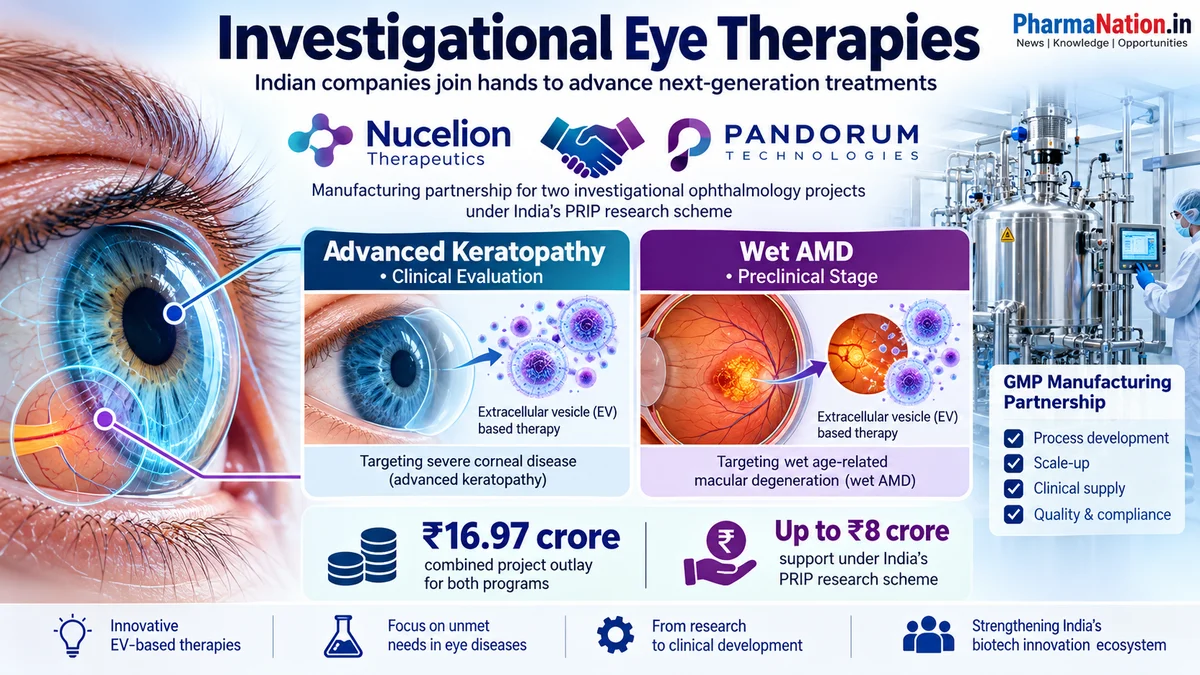
Nucelion and Pandorum Partner on Two Experimental Eye Therapies in India
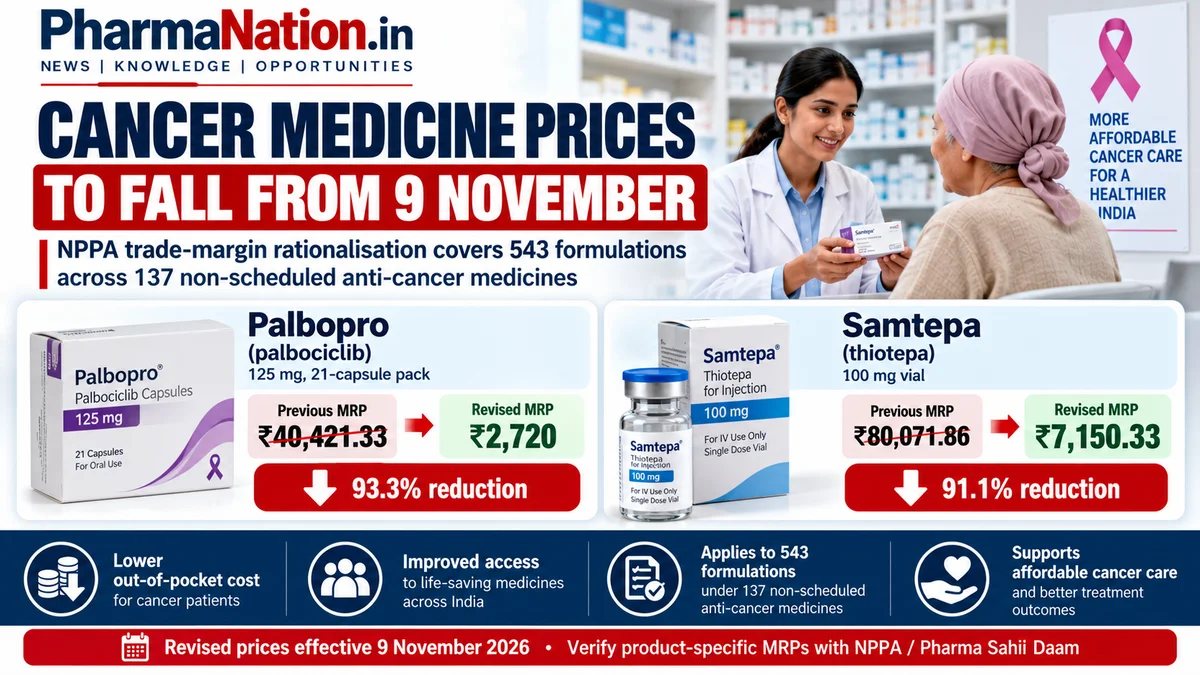
NPPA ने घटाईं 543 कैंसर दवा फॉर्मूलेशन की कीमतें, 9 नवंबर से नई दरें लागू
Reader Comments
Comments are reviewed by our desk before they appear. Sign in with your mobile number to join the discussion.