
India Proposes Authorised Person for Drug Batch Release: What the New Draft Rules Mean


The Union Health Ministry has proposed changes to the Drugs Rules, 1945 that would require manufacturers to formally authorise a suitably qualified and experienced person for batch release, maintain records for every batch and use a prescribed Batch Release Certificate. The proposal aims to make quality decisions more accountable and traceable. It is a draft—not yet a final rule.
Before medicines enter distribution, the manufacturer must review whether each batch was made and tested according to approved requirements. This final quality decision is known as batch release.
On 3 November 2026, the Union Ministry of Health and Family Welfare announced a proposed amendment to the Drugs Rules, 1945. The draft was published as G.S.R. 955(E), dated 28 October 2026. It would require applicants for relevant manufacturing licences to authorise a suitably qualified and experienced person for batch release, keep prescribed records for each batch and use a standard Batch Release Certificate. Read the Ministry's announcement.
What exactly is batch release?
Imagine a factory has made 100,000 tablets. Production is complete and the laboratory has tested samples. Can the entire batch automatically be sent to wholesalers? No. The complete batch file must first be reviewed.
The review checks materials, manufacturing steps, in-process controls, finished-product results, deviations and packaging records.
Only after the required review and certification should a batch be released for sale or supply. The World Health Organization's GMP guidance describes an authorised person as responsible for ensuring that each finished-product batch has been manufactured, tested and approved for release in line with applicable laws. WHO GMP guidance.
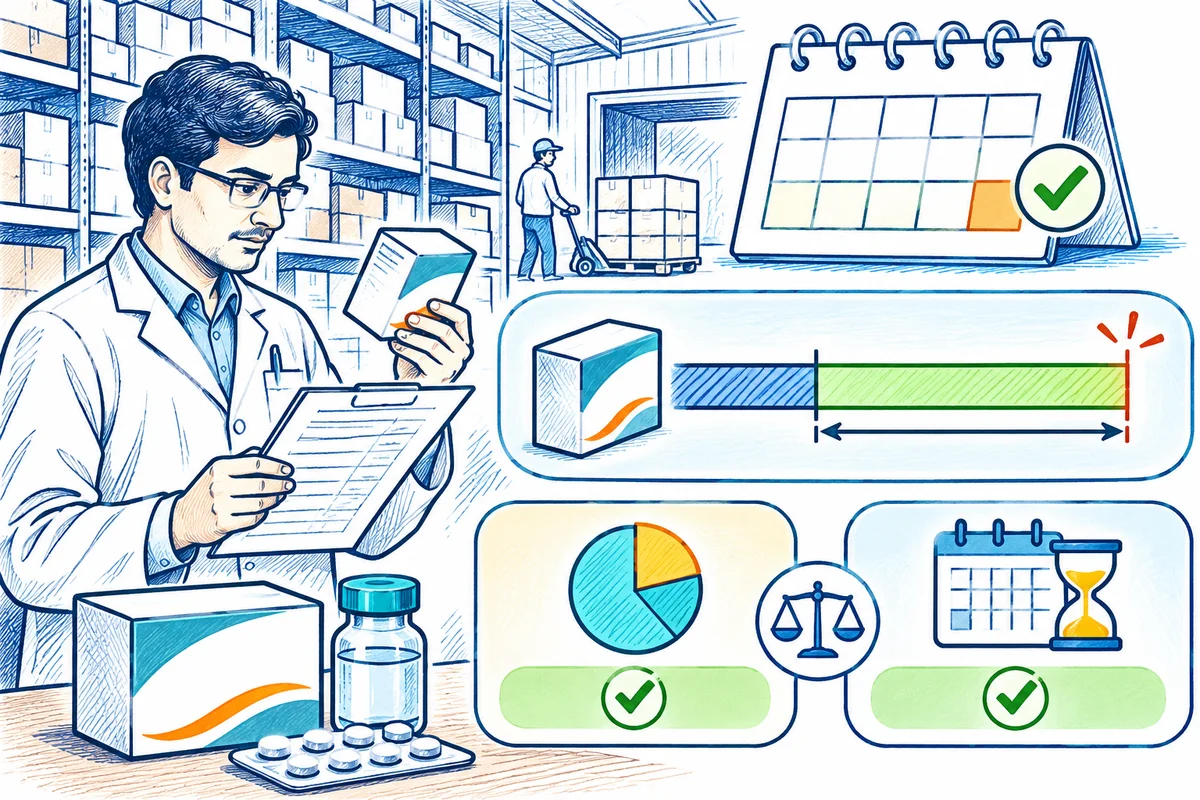
Illustration: Manufacturing, laboratory testing, documentation review and final batch release are connected steps.
What is the government proposing?
The draft proposes inserting a new Rule 68C into the Drugs Rules. An applicant for a manufacturing licence under the relevant part would have to authorise a person for batch release in compliance with Schedule M, with appropriate qualification and experience.
It also proposes changes to Rules 74, 74A, 74B, 78, 78A and 122G, and to the records provisions for blood products in Schedule F. The common requirement is that batch-release records would become an express part of the records manufacturers must maintain.
The Ministry says manufacturing licences already require details of competent technical staff responsible for manufacturing and testing, but there is no specific provision for identifying the person authorised to undertake batch release. The proposal is intended to close this accountability gap.
What will the Batch Release Certificate contain?
The draft proposes a new section in Schedule U setting out particulars for a Batch Release Certificate. The proposed record would cover:
Product name, dosage form and active ingredients.
Manufacturing licence number, batch or lot number and batch size.
Manufacturing date and expiry or retest date.
Addresses of manufacturing and testing sites, and the marketer.
Details of qualified equipment and environmental monitoring.
Batch manufacturing and packaging records, including line clearance.
In-process quality-control reports and test protocols.
Certificate of Analysis, analytical results and report number.
The certificate would end with a Certificate of Conformity, in which the authorised person certifies that the batch was manufactured, including packaging, and tested at the stated sites in compliance with GMP requirements under the Drugs Rules, 1945. Read the full draft notification.

Illustration: The proposed certificate would create a structured record of the checks supporting a batch-release decision.
Why is this change important?
The main benefit is traceability. If a quality problem is later found, investigators need to know what was manufactured, where it was tested, which records were reviewed and who authorised release. A standard certificate can make that trail easier to follow.
There is a regulatory history behind the proposal. At its 65th meeting on 20 December 2024, the Drugs Consultative Committee discussed the absence of the batch-release person's name on manufacturing licences. It agreed with the proposal to include the authorised person's name and a batch-release certificate format, and recommended referring the matter to the Drugs Technical Advisory Board. The current draft is a further step in that process. CDSCO meeting minutes.
For manufacturers, batch release must be a documented review supported by clear authority, trained staff and records that can be retrieved during an inspection.
What should pharmaceutical manufacturers prepare?
While the proposal is under consultation, manufacturers can review who checks batch records, verifies laboratory results, investigates deviations and makes the final release decision. They can also review SOPs, job descriptions, training records, document control and batch-file archiving.
The draft uses the phrase 'appropriate qualification and experience' but does not name one specific degree in Rule 68C. Manufacturers should not assume that it has already created a B.Pharm-, M.Pharm- or other degree-only eligibility rule. The final wording or later regulatory guidance may clarify expectations.
Smaller manufacturers may need to consider the practical cost of appointing and training an authorised person and maintaining additional documentation. The objective should be meaningful quality oversight, not simply adding another signature to paperwork.
Does the proposal matter for pharmacy graduates and QA professionals?
Potentially. The proposal highlights work associated with quality assurance, production documentation, quality control and GMP compliance. Pharmacy graduates in these areas may find batch-record review, deviation investigation and documentation skills increasingly important. However, the draft does not guarantee a new job category or make every pharmacy graduate eligible; the requirement is appropriate qualification and experience.
Draft or final rule: what is the current status?
G.S.R. 955(E) is a draft notification, not a final amendment already in force. The Gazette invites objections and suggestions within 30 days from the date copies of the Gazette are made available to the public. Submissions may be sent to the Under Secretary (Drugs Regulation), Ministry of Health and Family Welfare, Kartavya Bhawan-1, New Delhi, or by email to drugsdiv-mohfw@gov.in.
The draft text says the proposed rules would come into force three months after publication in the Official Gazette. This is the draft's proposed commencement wording; the final rule and effective date may change after consultation. Manufacturers should monitor the final notification rather than treating the draft as an immediate new legal obligation.
Conclusion: a named decision-maker can strengthen the quality trail
The proposed amendment moves towards clearer responsibility by linking batch release to an appropriately qualified person and supporting records. Its value will depend on implementation: the authorised person needs complete records, authority to withhold a batch when requirements are not met and a quality system that supports evidence-based decisions.
A certificate alone cannot guarantee medicine quality. Competent people, a well-run quality system and proper regulatory oversight must work together. That is the real test of this proposed reform.
Editorial Disclaimer:
This article explains a draft regulatory proposal published on 28 October 2026 and the Ministry's statement of 3 November 2026. It is for general informational and educational purposes, not legal advice. Manufacturers should read the complete Gazette notification and seek professional regulatory advice before changing licensing or release procedures.
Sources and official references
Esskay bhayana, being a registered pharmacist & having more than 30+ years of experience, covers news and latest innovations in the pharmaceutical industry.
More from this section
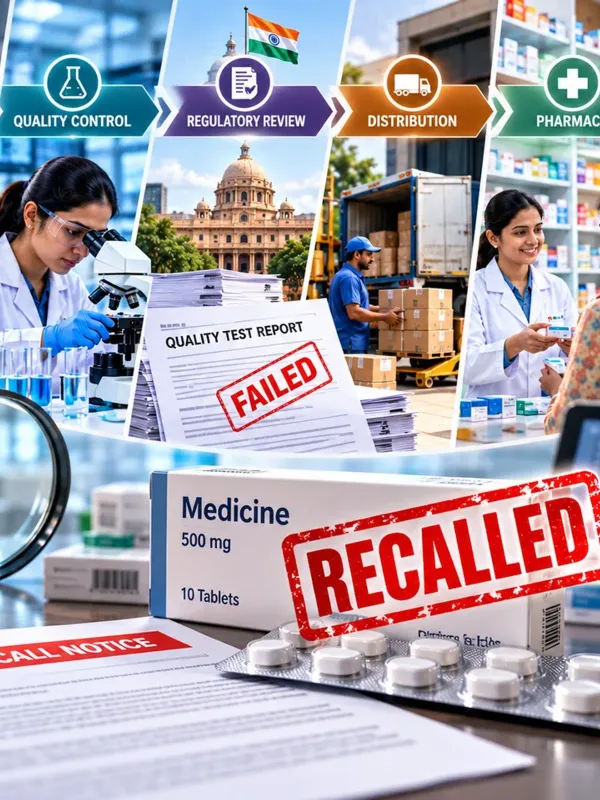
भारत में दवा रिकॉल कैसे होता है? जब कोई दवा गुणवत्ता जांच में फेल हो जाए तो क्या कार्रवाई होती है?

PCI Forms 32-Member Panel to Make Pharmacy Graduates Industry-Ready
Government Sets Up Panel to Review Pharma Marketing Rules in India

Reader Comments
Comments are reviewed by our desk before they appear. Sign in with your mobile number to join the discussion.