
Career Options After B.Pharm in India: A Complete Guide to Jobs, Higher Studies and Business Opportunities
Explore the best career options after B.Pharm in India, including pharma jobs, government vacancies, pharmacovigilance, clinical research, M.Pharm, MBA and business opportunities.


Choosing a career after B.Pharm can be confusing. Some students want to work in the pharmaceutical industry, some dream of a government job, while others want to pursue higher education or start their own business.
The good thing is that a Bachelor of Pharmacy degree offers more career options than many students initially realise. You are not restricted to working at a medical store or becoming a hospital pharmacist. From research and manufacturing to clinical research, regulatory affairs, marketing and entrepreneurship, the pharmaceutical sector offers several career paths.
But the important question is: Which career option is right for you, and how should you prepare for it?
Let's understand the opportunities one by one.
1. Pharmaceutical Manufacturing and Production
One of the traditional career options after B.Pharm is working in pharmaceutical manufacturing.
Medicines are manufactured in facilities that follow strict quality and regulatory requirements. These facilities need trained professionals to manage production activities, documentation and compliance.
Common job profiles include:
Production Officer
Manufacturing Executive
Production Chemist
Packaging Officer
Manufacturing Supervisor
Fresh graduates can begin with trainee or junior-level positions and gradually move into supervisory and managerial roles.
Students interested in this field should develop a good understanding of pharmaceutical formulations, manufacturing processes, GMP and documentation practices.
2. Quality Control (QC) and Quality Assurance (QA)
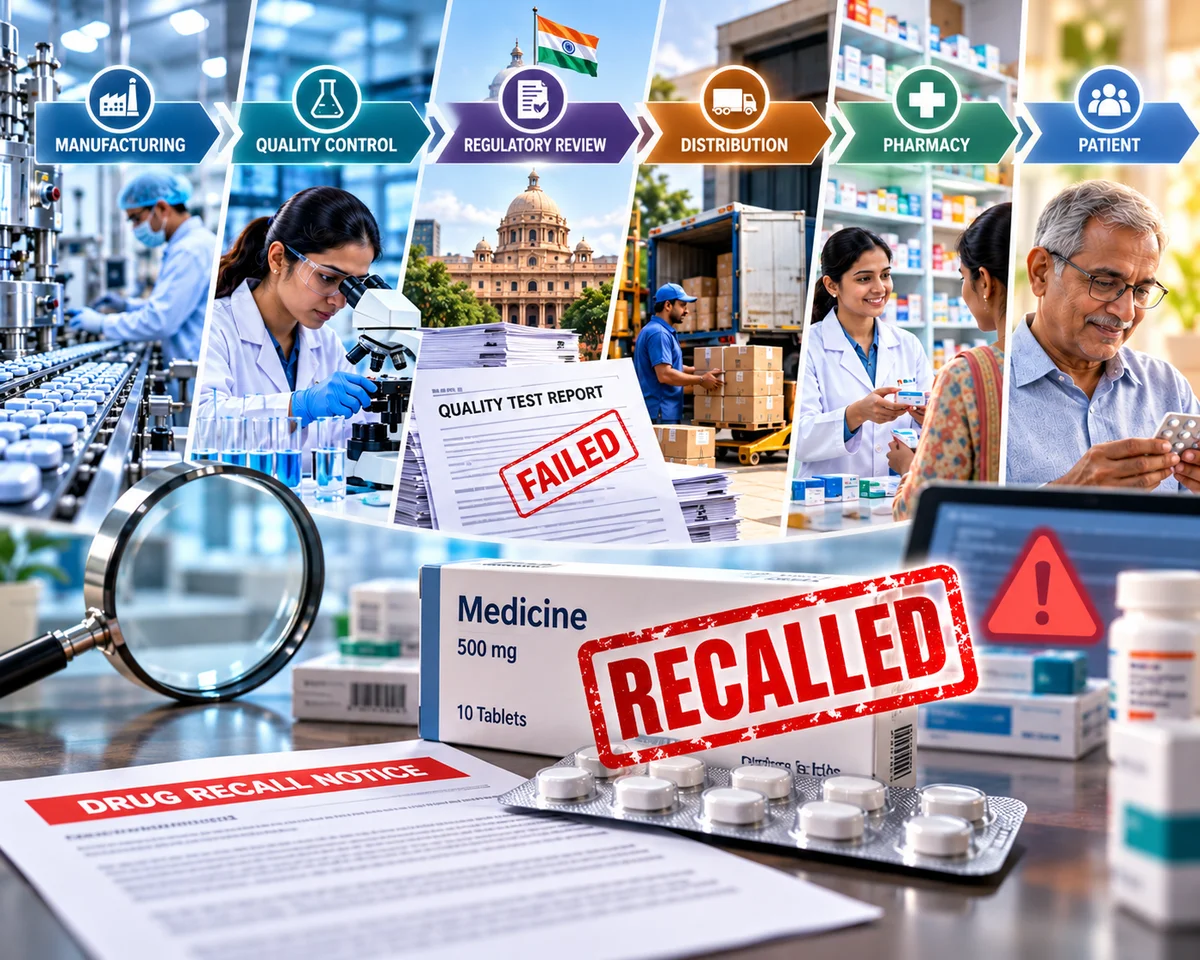
Quality is one of the most important aspects of the pharmaceutical industry. A medicine must meet defined standards of identity, strength, quality and purity before it reaches patients.
This creates opportunities in two important departments.
Quality Control (QC): QC professionals test raw materials, in-process samples and finished products to ensure that they meet the required specifications.
Quality Assurance (QA): QA professionals focus on systems, procedures, documentation, audits and compliance to ensure that manufacturing and quality processes are properly followed.
Possible job profiles include:
Quality Control Analyst
QA Executive
Documentation Executive
Validation Officer
Quality Assurance Officer
Students who enjoy laboratory work, accuracy and systematic processes may find this field suitable.
3. Pharmacovigilance and Drug Safety
Have you ever wondered how pharmaceutical companies monitor the safety of medicines after they are launched?
This is where pharmacovigilance comes in.
Pharmacovigilance involves the detection, assessment, understanding and prevention of adverse effects and other medicine-related problems.
Professionals in this field work on:
Collecting adverse drug reaction (ADR) reports
Reviewing medicine safety information
Preparing safety documentation
Monitoring potential drug-related risks
Supporting drug safety reporting activities
Pharmacovigilance can be a good career choice for pharmacy and other eligible life-science graduates. However, individual employers may have different eligibility requirements.
Useful skills: Medical terminology, pharmacology, scientific writing, attention to detail and familiarity with drug safety databases.
4. Clinical Research and Clinical Data Management
Before a new medicine is approved for routine use, it generally undergoes clinical evaluation to assess its safety and effectiveness.
Clinical research professionals support the planning, conduct, monitoring and documentation of clinical trials.
Some career opportunities include:
Clinical Research Coordinator
Clinical Trial Assistant
Clinical Research Associate (CRA)
Clinical Data Management Executive
Regulatory Documentation Executive
A pharmacy background can provide a useful foundation for understanding medicines, dosage forms and clinical terminology.
Students interested in this field should learn about clinical trial processes, Good Clinical Practice (GCP), research ethics and clinical trial documentation.
5. Regulatory Affairs
Every medicine must comply with applicable regulatory requirements before it can be manufactured, marketed or sold.
Regulatory affairs professionals help pharmaceutical companies prepare and maintain the documentation required by regulatory authorities.
Their responsibilities may include:
Preparing regulatory submissions
Reviewing product documentation
Coordinating with regulatory authorities
Tracking changes in regulations
Supporting product registration and approvals
This field is suitable for people who enjoy documentation, research, technical reading and regulatory compliance.
Knowledge of Indian drug regulations, CDSCO procedures and international regulatory frameworks can be valuable.
6. Medical Representative and Pharmaceutical Marketing
Not every pharmacy graduate wants to work in a laboratory or manufacturing unit. Some students have good communication skills and enjoy interacting with people.
For them, pharmaceutical sales and marketing can be an attractive career option.
A Medical Representative (MR) communicates product-related information to healthcare professionals and works towards business targets assigned by the company.
With experience, professionals can move into positions such as:
Area Business Manager
Regional Sales Manager
Product Manager
Marketing Manager
Business Development Manager
This career requires communication, product knowledge, relationship management and an understanding of the pharmaceutical market.
7. Government Jobs After B.Pharm
Government employment is another popular choice among pharmacy graduates.
Depending on the recruitment notification and eligibility criteria, opportunities may be available in:
Government hospitals and healthcare institutions
Government pharmaceutical organisations
Drug regulatory departments
Public-sector undertakings
Research and educational institutions
Some students also prepare for competitive examinations and recruitment processes for pharmacist posts.
Important: Pharmacist posts generally require the prescribed pharmacy qualification and registration with the relevant State Pharmacy Council, as specified in the recruitment rules. Other government positions may have different eligibility requirements.
Always check the official recruitment notification before applying.
8. Higher Education After B.Pharm
If you want to specialise, improve your technical knowledge or move towards research and teaching, higher education can be a good option.
Here are some popular choices:
M.Pharm: A postgraduate degree with specialisations such as Pharmaceutics, Pharmacology, Pharmaceutical Chemistry, Pharmacognosy and Pharmacy Practice.
MBA in Pharmaceutical Management: Suitable for students interested in pharmaceutical business, marketing, management and administration.
Pharm.D (Post Baccalaureate): An option for eligible B.Pharm graduates who want to pursue advanced clinical pharmacy education, subject to applicable admission rules.
Ph.D.: Students interested in research and academic careers can consider doctoral studies after meeting the required eligibility criteria.
Before selecting a course, compare its curriculum, recognition, practical exposure, placement support and total cost.
9. Starting Your Own Pharmaceutical Business
A pharmacy degree can also help you explore entrepreneurship.
Some possible business opportunities include:
Retail pharmacy
Wholesale pharmaceutical distribution
Pharmaceutical marketing and distribution
Third-party manufacturing and own-brand products
Medical and surgical product distribution
Online health and personal-care retail
However, pharmaceutical businesses are regulated. Depending on the activity, you may need drug licences, qualified personnel, GST registration and other statutory approvals.
For example, retail and wholesale drug sales require the appropriate licences under applicable drug laws. An online store does not remove these regulatory responsibilities.
Entrepreneurship can offer independence, but it also requires capital, market understanding, compliance and business-management skills.
10. Skills That Can Improve Your Career Prospects
A degree is important, but employers also look for practical skills and the ability to work in a professional environment.
Try to develop these skills during your studies:
Communication skills: Improve your ability to explain technical information clearly.
Computer knowledge: Learn MS Excel, Word, PowerPoint and basic data handling.
Industry knowledge: Follow pharmaceutical companies, regulatory updates and medicine-related developments.
Documentation: Understand SOPs, batch records, quality documents and technical writing.
Internship experience: Try to gain practical exposure through internships and industrial training.
Professional networking: Connect with industry professionals, alumni and recruiters.
Even a short internship can help you understand the difference between classroom learning and actual industry work.
11. How to Choose the Right Career Path?
Do not select a career only because your friends are choosing it or because someone told you that a particular field offers a high salary.
First, understand your interests and strengths.
Your interest | Career paths to explore |
|---|---|
Laboratory work | QC, Research and Development |
Documentation and regulations | QA, Regulatory Affairs |
Medicine safety | Pharmacovigilance |
Patient and clinical work | Clinical Research, Pharmacy Practice |
Communication and sales | Medical Representative, Marketing |
Business and independence | Distribution, Retail Pharmacy, Entrepreneurship |
Research and academics | M.Pharm, Ph.D., Teaching |
There is no single best career option after B.Pharm. The right choice depends on your interests, abilities, financial situation and long-term goals.
Conclusion: Your B.Pharm Degree Is a Starting Point, Not the Destination
The pharmaceutical industry is much broader than manufacturing medicines or dispensing prescriptions. It includes research, quality management, clinical trials, regulatory affairs, drug safety, marketing, healthcare services and business.
The most important thing is to start exploring these opportunities early.
If you are still studying, use your college years to develop practical skills and gain industry exposure. If you have already completed B.Pharm, identify the field that matches your interests and work towards the qualifications and experience it requires.
Remember, a successful career is not built by choosing the most popular option. It is built by choosing the right direction and consistently improving yourself.
Frequently Asked Questions (FAQs)
1. What can I do after B.Pharm in India?
You can explore pharmaceutical manufacturing, quality control, quality assurance, pharmacovigilance, clinical research, regulatory affairs, pharmaceutical marketing, government jobs, higher studies and entrepreneurship.
2. Is B.Pharm enough to get a job?
Yes, many entry-level industry positions accept B.Pharm graduates. However, some specialised roles require additional qualifications, training or experience.
3. Can I get a government job after B.Pharm?
Yes. Eligible graduates can apply for pharmacist and other relevant government vacancies, depending on the recruitment rules and required registration.
4. Is M.Pharm better than MBA after B.Pharm?
It depends on your career goal. M.Pharm is generally more suitable for technical, research and academic pathways, while an MBA can be useful for management, marketing and business careers.
5. Can a B.Pharm graduate start a medical store?
Yes, subject to applicable licensing requirements. A retail pharmacy must meet the prescribed drug licensing conditions, including requirements relating to registered pharmacists.
6. Which skills should I learn during B.Pharm?
Focus on communication, computer skills, practical laboratory knowledge, documentation, regulatory awareness and internship experience.
Esskay bhayana, being a registered pharmacist & having more than 30+ years of experience, covers news and latest innovations in the pharmaceutical industry.
More from this section

B.Pharm के बाद क्या करें? नौकरी, सरकारी जॉब, M.Pharm या अपना बिजनेस – जानिए करियर के सभी रास्ते

Pharmacy Career in India and Abroad: The Complete Roadmap from Diploma to PhD, Salaries, Jobs and Global Opportunities

Pharma Career in India: Jobs, Salary, Skills & Future Growth
Reader Comments
Comments are reviewed by our desk before they appear. Sign in with your mobile number to join the discussion.