
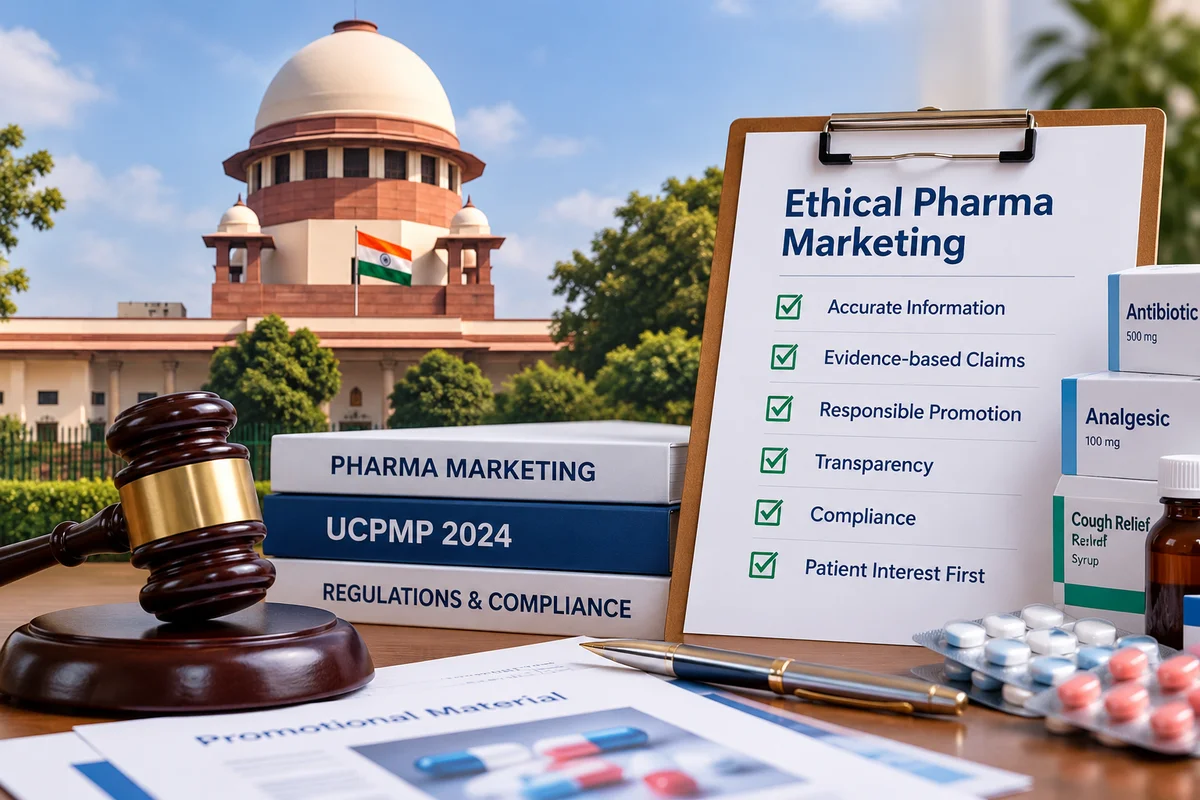
India's Pharma Marketing Rules Under Scrutiny: What the Supreme Court's Move Means for the Industry
India's pharmaceutical marketing practices are facing renewed scrutiny as the Supreme Court calls for a review of existing safeguards. The proposed review could reshape how drug companies promote medicines, engage healthcare professionals and demonstrate compliance.
India's pharmaceutical industry is one of the world's largest suppliers of medicines, but the way medicines are promoted has long raised questions about transparency, ethical conduct and patient interests.
In October 2026, the Supreme Court directed the central government to establish a panel to examine gaps in the existing framework governing pharmaceutical marketing practices. The development has renewed attention on the Uniform Code for Pharmaceutical Marketing Practices (UCPMP) 2024 and whether the current system provides adequate oversight and enforcement. Source: Financial Express
For pharmaceutical companies, distributors, medical representatives and healthcare professionals, this is more than a regulatory headline. It is a reminder that ethical promotion and transparent business practices are becoming increasingly important.
What has triggered the renewed scrutiny?
Pharmaceutical marketing involves product information, scientific engagement, promotional materials, medical conferences and interactions between companies and healthcare professionals.
These activities can support awareness of treatment options when conducted responsibly. Concerns arise when promotional incentives or commercial influence risk affecting prescribing decisions.
Recent public comments from the Pharmaceuticals Secretary have also highlighted concerns that steep margins on medicines may create opportunities for malpractice and influence product selection. Source: The Times of India
The Supreme Court's intervention places the effectiveness of the existing safeguards under examination.
What is UCPMP 2024?
The UCPMP 2024 is India's framework for promoting ethical pharmaceutical marketing. It addresses how pharmaceutical companies interact with healthcare professionals and how medicines are promoted.
Its objectives include encouraging responsible conduct and reducing practices that could compromise independent clinical judgement.
Key areas of relevance include:
Gifts and hospitality: Maintaining appropriate boundaries in interactions with healthcare professionals.
Promotional claims: Ensuring that claims about medicines are accurate and appropriately supported.
Scientific engagement: Keeping educational activities focused on legitimate scientific and professional purposes.
Transparency and documentation: Maintaining records that support accountability.
Complaints and enforcement: Providing mechanisms to raise concerns and address alleged violations.
The current code remains operational while the government reviews whether additional measures or a stronger regulatory framework are needed. The Supreme Court has not, by this development alone, converted the code into a statutory law.
What happens next?
According to reporting on the court's direction, the government is expected to establish a panel to examine shortcomings in the current framework, seek stakeholder input and recommend improvements.
The review could consider questions such as:
Are existing complaint mechanisms effective?
Is there sufficient transparency around promotional expenditure and benefits?
Should enforcement powers or penalties be strengthened?
How can legitimate scientific engagement be distinguished from inappropriate inducements?
What role should industry associations and healthcare professionals play in compliance?
The final outcome will depend on the panel's work and subsequent government decisions. Companies should not treat proposed changes as already implemented law.
What should pharmaceutical companies do now?
Businesses do not need to wait for a new framework to strengthen their compliance systems. Practical preparation can begin immediately.
A compliance checklist for pharma companies:
Review promotional materials: Ensure product claims are evidence-based, balanced and consistent with approved information.
Audit interactions with healthcare professionals: Check hospitality, sponsorships, gifts and other benefits against applicable requirements.
Maintain clear records: Document promotional expenditure, educational events, approvals and relevant business decisions.
Train sales teams: Make sure medical representatives understand ethical promotion and the risks associated with improper inducements.
Strengthen complaint handling: Provide a clear process for reporting, investigating and resolving potential violations.
Monitor official developments: Review government notifications and formal directions before changing compliance policies.
These measures can help reduce compliance risks while protecting professional credibility.
What could this mean for medical representatives?
Medical representatives play an important role in communicating product information, but commercial targets should not override ethical responsibilities.
A stronger compliance environment could place greater emphasis on documented scientific communication, appropriate interactions with doctors and transparent promotional practices.
Companies may also need to invest more in employee training, internal audits and compliance oversight.
PharmaNation's perspective
Ethical pharmaceutical marketing is not simply a regulatory obligation. It is central to building trust among doctors, pharmacists, patients and the wider healthcare system.
Responsible promotion helps ensure that treatment decisions are guided by clinical evidence and patient needs rather than inappropriate commercial influence.
The Supreme Court's intervention creates an opportunity to examine whether India's current safeguards are working effectively and where they need improvement. The industry should use this period constructively by strengthening internal compliance, improving transparency and prioritising scientific integrity.
The key takeaway: Pharmaceutical companies should prepare for closer scrutiny without assuming that proposed reforms are already law. The direction of travel is clear: credible evidence, responsible promotion and accountable business practices are essential to the industry's long-term reputation.
Disclaimer
This article is for general informational and educational purposes only and does not constitute legal or regulatory advice. Readers should consult the applicable official directions and seek qualified professional guidance before making compliance decisions.
PharmaNation Editorial Note
We will continue to follow developments in pharmaceutical marketing regulation and explain their practical implications for India's pharmaceutical industry.